“The advent of the automobile was the great democratizing factor” in the development of our national parks. This statement by Lee Whittlesey frames the theme of Ken Burn’s film as it explores the expansion of the national park system east of the Mississipi and within reach of the three-quarters of the American people who lived there. The railroad liasons encouraged by Parks superintendent Stephen Mather were forsaken by him for a love affair with the automobile that co-evolved with our broader national shift on a similar bent. The automobile became America’s way to visit the National Parks, and they became available to many levels and locales of American society.
In 1920 National Parks visitors reached the one million mark for a year. Mather, whose central vision of the parks involved recreation, had achieved this through strategies that included golf courses, zoos, summer camps, and a proposal for Yosemite Valley as a prime site for the Winter Olympics. In the years following , Mather worked with auto clubs, chambers of commerce, “Good Roads” initiatives, and highway builders to begin and promote a national park scenic roadway. Within two years, the visitor count had doubled to two million a year. For Mather the car and its highways were the “Open Sesame” to a new era.
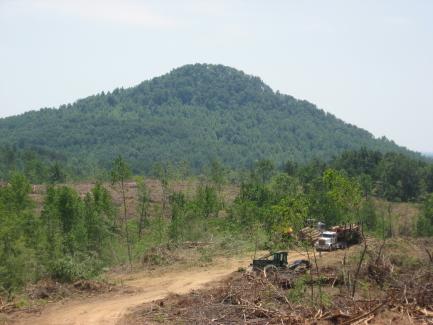
For us Tarheels, an important part of that new era was the formation of The Great Smokies National Park. It was the first National Park built partly with federal funds, and benefited from CCC and WPA work during the depression. The film devotes a nice section called “Back of Beyond” to the creation of the park, primarily through the efforts of Horace Kephart, a genius librarian with a life broken by marital woes and drinking, who moved to the Smokies for a life respite and spent the rest of his life working to protect the landscape he said had saved his soul. He received tremendous support from Asian photographer George Masa as well as the collected funds of grade school children from Asheville to Tennessee.
Kephart was drawn to the “dreamy blue smoky haze” of the Smokies, where skyline merged with sky. He found an “astonishing isolation of a majestic region set in the midst…of American civilization.” He also found a community of outsiders with whom he could identify, described in the film as “moonshiners, Confederate deserters, Union sympathizers and remnants of the Cherokee Tribe who had taken the Trail of Tears to Oklahoma. The film also demonizes (with great justification) the industrial logging which threatened to clear-cut the Smokies. The park preserves half a million acres, but a lot of the resident outsiders admired by Kephart gave up lands and homes to create it.
The Blue Ridge Parkway was created right along with The Great Smokies, and was originally called the “Appalachian Scenic Highway.” North Carolina’s mountains serve as a classic example of the automotive travel site, and I personally am very proud of the Parkway and can live, in the longest run, with the sacrifices of our mountain families. We are all lucky to have the old growth Appalachian forests that we have – if we can just preserve them from acid rain and invasive species!
Stephen Mather may have done his bit to propel us toward a car-dominated society, but his overall accomplishents with the Parks remain massive. One aspect emphasized in this part of the film was his professionalization of the Park Service. He hand-picked superintendents and allowed a strong culture of preservation to develop that serves even today as a constant balance to the recreational use of the parks. The Park Rangers are given tribute as the personification of the parks, with the romanticism of a campfire talk by a Ranger as the epitome of a source for natural history. Look for one more post about the wrap-up of this film, which ended its story at 1980. And know that a big goal now is to get myself to the Great Smokies for a dip back into our very own National Park!
PBS home page of Nat. Parks film
PBS pages for the individual parks
You may select shorts videos of sections of the film here.
Raleigh Nature posts on the Ken Burns film




 raleighnaturalist
 The Raleigh Naturalist
