The Raleigh Naturalist

November 1, 2009

Park Your Car – Drive Your Park

Filed under: About & reflection, Exotica, Greenways & Parks — Tags: — raleighnaturalist @ 11:01 pm

Continental Divide_1_1

“The advent of the automobile was the great democratizing factor” in the development of our national parks.  This statement by Lee Whittlesey frames the theme of Ken Burn’s film as it explores the expansion of the national park system east of the Mississipi and within reach of the three-quarters of the American people who lived there.  The railroad liasons encouraged by Parks superintendent Stephen Mather were forsaken by him for a love affair with the automobile that co-evolved with our broader national shift on a similar bent.  The automobile became America’s way to visit the National Parks, and they became available to many levels and locales of American society.

In 1920 National Parks visitors reached the one million mark for a year.  Mather, whose central vision of the parks involved recreation, had achieved this through strategies that included golf courses, zoos, summer camps, and a proposal for Yosemite Valley as a prime site for the Winter Olympics.  In the years following , Mather worked with auto clubs, chambers of commerce, “Good Roads” initiatives, and highway builders to begin and promote a national park scenic roadway.  Within two years, the visitor count had doubled to two million a year.  For Mather the car and its highways were the “Open Sesame” to a new era.
South Mtn development_1_1

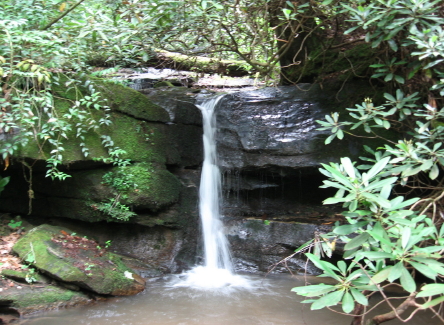
For us Tarheels, an important part of that new era was the formation of  The Great Smokies National Park.  It was the first National Park built partly with federal funds, and benefited from CCC and WPA work during the depression.  The film devotes a nice section called “Back of Beyond” to the creation of the park, primarily through the efforts of Horace Kephart, a genius librarian with a life broken by marital woes and drinking, who moved to the Smokies for a life respite and spent the rest of his life working to protect the landscape he said had saved his soul.  He received tremendous support from  Asian photographer George Masa as well as the collected funds of grade school children from Asheville to Tennessee.

 Kephart was drawn to the “dreamy blue smoky haze” of the Smokies, where skyline merged with sky.  He found an “astonishing isolation of a majestic region set in the midst…of American civilization.”  He also found a community of outsiders with whom he could identify, described in the film as “moonshiners, Confederate deserters, Union sympathizers and remnants of the Cherokee Tribe who had taken the Trail of Tears to Oklahoma.  The film also demonizes (with great justification) the industrial logging which threatened to clear-cut the Smokies.  The park preserves half a million acres, but a lot of the resident outsiders admired by Kephart gave up lands and homes to create it.

The Blue Ridge Parkway was created right along with The Great Smokies, and was originally called the “Appalachian Scenic Highway.”  North Carolina’s mountains serve as a classic example of the automotive travel site, and I personally am very proud of the Parkway and can live, in the longest run, with the sacrifices of our mountain families.  We are all lucky to have the old growth Appalachian forests that we have – if we can just preserve them from acid rain and invasive species!

Stephen Mather may have done his bit to propel us toward a car-dominated society, but his overall accomplishents with the Parks remain massive. One aspect emphasized in this part of the film was his professionalization of the Park Service.  He hand-picked superintendents and allowed a strong culture of preservation to develop that serves even today as a constant balance to the recreational use of the parks.  The Park Rangers are given tribute as the personification of the parks, with the romanticism of a campfire talk by a Ranger as the epitome of a source for natural history.  Look for one more post about the wrap-up of this film, which ended its story at 1980.  And know that a big goal now is to get myself to the Great Smokies for a dip back into our very own National Park!

PBS home page of Nat. Parks film

PBS pages for the individual parks

You may select shorts videos of sections of the film here.
creek into Broad_1_1

Raleigh Nature posts on the Ken Burns film

October 28, 2009

Ken Burns and Dayton Duncan probe American character

Filed under: About & reflection, Exotica, Gems & Surprises — Tags: , , — raleighnaturalist @ 1:37 am
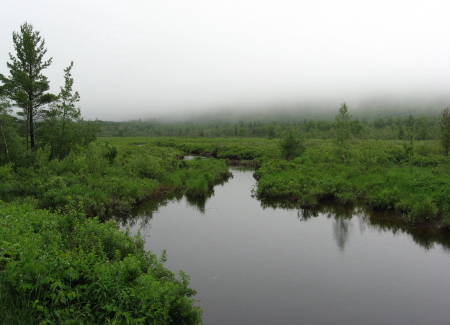
Acadia interior creek_1_1

Acadia National Park

How radical is the idea of national parks? Dayton Duncan, Ken Burn’s partner in the National Park series, opens the series stating that entering one of these natural spaces crosses a boundary where human individuals are not the masters.  Yet we as a society DO control the existence, present and future, of the spaces themselves.  Their existence depends on democracy, while typifying the best element of democracy – universal access to high aspirations.  The PBS series initially focuses on John Muir’s highly spiritual perspective on the value of experiencing nature, and the contemporary writers who talk in the film extoll the very long term value of saving these spaces, whether humans ever visited them or not – just for the sake of their existence.  Yet the Burns series, in segment 3, “Empire of Grandeur,” portrays the eventual development and permanent protection of the parks as an evolving response to economic forces, development and use trends, and patriotic fervor expressed by some of the richest folks in the land.

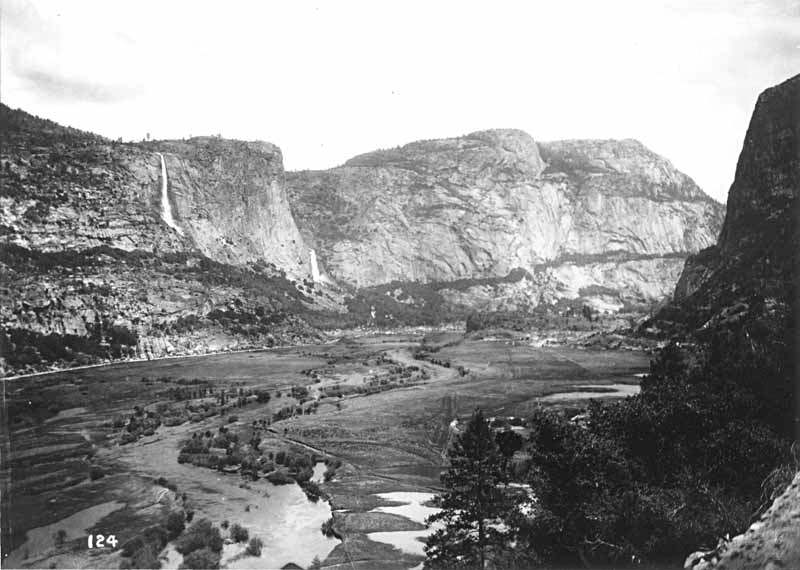
Hetch_Hetchy_Valley

public domain image of Hetch Hetchy Valley from Wikipedia

John Muir died in 1914 knowing he had failed in protecting his very favorite nature spot, Hetch Hetchy Valley.  Part of Yosemite National Park, it was flooded by the creation of a reservoir in 1913.  This loss, still controversial, is portrayed in the Burns film as a trigger or rallying point which instigated and motivated much support for the parks and the emerging Park Service, which would provide organized regulation and protection of park lands and wildlife – wildlife being an afterthought in some roots of national parks thinking.  Muir inspired a strong and still-present reverential perspective on the natural landscape, but the national parks themselves were captured and developed by a very different mode of operation.

Stephen Mather was the first of many very rich men to support the National Park System, and perhaps the most devoted to its cause.  His vision, implemented through years of quasi-volunteer government service with crucial assistance from Horace Albright, saw economics and patriotism as the twin keys to developing the national parks.  “Popularize to Protect” was the slogan of his very successful PR campaign to promote the parks.  If enough people visited them and enough philanthropists claimed them as causes, they would be safe.  Mather rescued the parks from a variety of unsavory commercial interests and activities, but also allowed railroad interests to pursue park politics, Native Americans to be marginalized, and a group of populist patricians to dominate the selection of park sites.

No one can argue with the success of the national parks, nor their importance, nor the profound satisfaction we as Americans can take in their existence and permanent status.  The paradox clearly stated by Dayton Duncan, who wrote the film, is in the tension between the enjoyment of them by The People and the unimpaired future existence of the natural features.  Duncan compares the broad parameters of the National Park charter to the Constitution, in that both allow for “movement into the future.”  We’ve evolved from “white men with property” to (almost)everybody, and so our view of national parks can perhaps transcend Major Tourist Site.

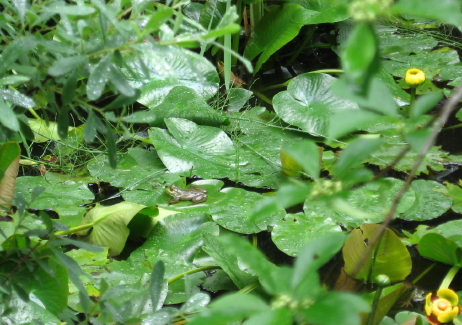
Abbe garden frog_1_1

The are glimmers of such vision embedded in the film.  Dayton Duncan gets a little teary describing his reaction, as an Iowan, to seeing new land on Earth created in Hawaii Volcanoes National Park.  ( Mark Twain jump-started his journalism career as one of the first visitors to Kilawea).  The spirituality of Muir endures well beyond the earnest pieties of the Serria Club.  Enos Mills and the Rockies, Charles Shelton and Alaska – the list of inspiring heroes and their meccas will continue throughout the massive film.  But if there is a truly radicalizing element in it, it is the off chance that watching it will provoke one to go experience one of these places.  One of the best reviews points out that many Californians could actually travel to one of several national parks in the time they spent watching the Burns film.  I hope you get out and find your special nature spot soon.  Take your time, and let the planet speak to you.  The message might be life-changing.

National Parks: America’s Best Idea

30 minute preview show

(selected footage from many parts of the project)

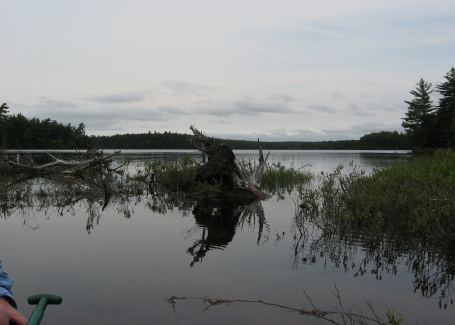
Long Pond from marshy area_1_1

Long Lake in Acadia National Park

Raleigh Nature posts on the Ken Burns film


October 4, 2009

Walnut Creek Wetland Center opening

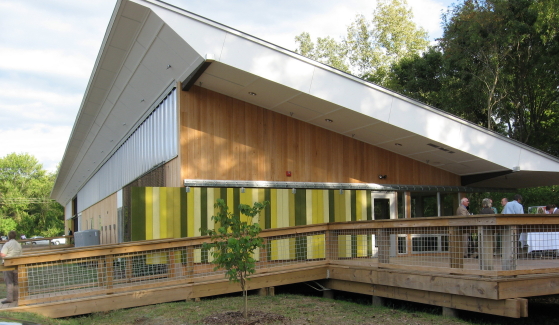
Walnut Creek Wetland Center_1_1

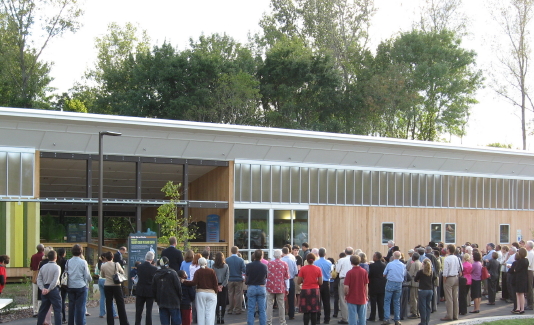
Numerous city and parks officials joined a large crowd of citizens for the ribbon-cutting ceremony celebrating the opening of  The Walnut Creek Wetland Center.

Mr West and Dr. Camp listen to Mayor Meeker

Mr West and Dr. Camp listen to Mayor Meeker

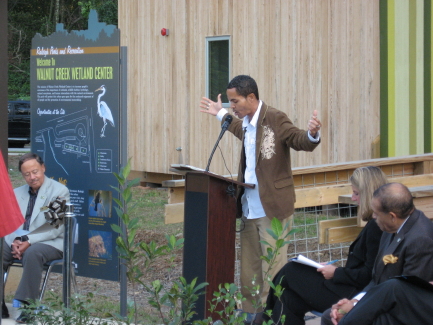
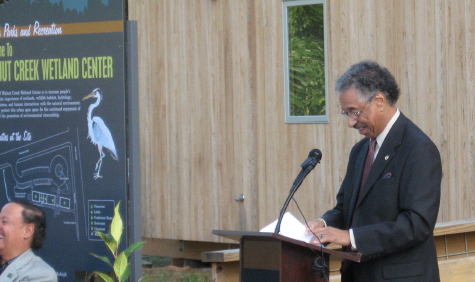
Dr. Norman Camp listened to Mayor Charles Meeker, city councilman James West and park officials speak about the new center.  Then the founder of Partners for Environmental Justice , and the man who sheperded this project into being, got up and spoke of the center as a shining new gem in Raleigh’s crown,” as quoted on Raleigh Eco News.

Walnut Creek crowd_1_1

The crowd listened attentively as the benefits for Southeast Raleigh as well as the ecosystem were described and the many supporters and participants were thanked.  Then they were rewarded with a magnificent poem written for the occasion, by Christopher Rowland, a Southeast Raleigh native who wows the crowds at Artspace’s Stammer under the name Langston Fuze.

Chris Rollins reads_1_1

Click here for a 1 minute video clip of the poem 

for the full text of the poem, see the post at

Raleigh Eco News

wetland musicians_1_1

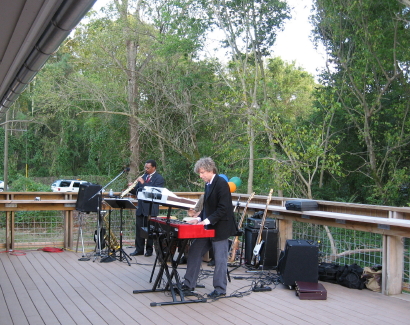
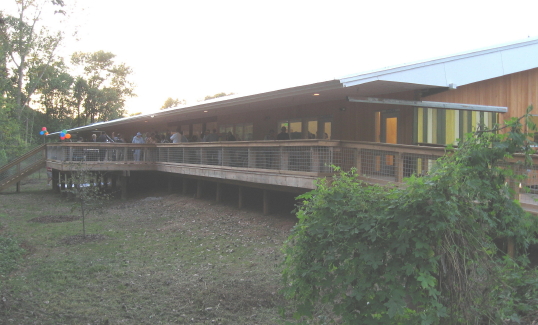
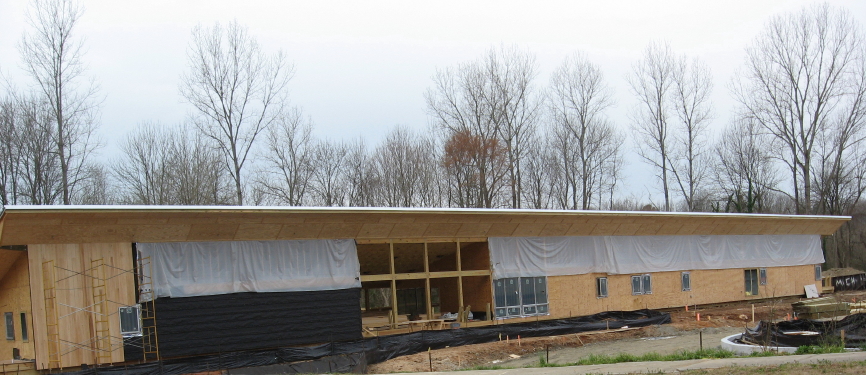
Musicians entertained on the “longest back porch in the Southeast,” and Erin Sterling, architect of record for the project from Frank Harmon Architecture, explained the details of the green design.  The building is 230 feet long and narrow so that all rooms get light from two sides and often three.  It is sloped up to the north and shelters its southern exposure with the long low porch roof.  Raleigh’s final budget did not allow for the planned rainwater cisterns, but they can come later and the gutters now direct into bioretention areas – long rain gardens that surround the space.  The building is on stilts and allows natural water flow under it – important in this floodplain.  Recycled lumber and building materials were used when possible, and native plantings surround the site.

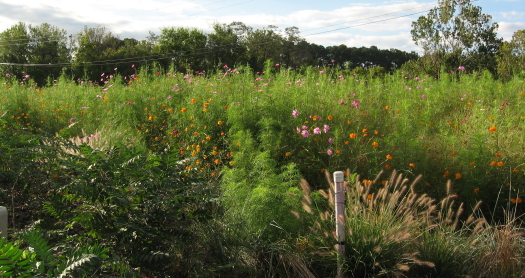
Walnut Creek Wetland center flower bed

Walnut Creek Wetland center flower bed

On the other hand, several of us gazed from the wonderful porch at a huge stand of Microstegia (bamboo or stilt grass) just at the edge of the construction clearing and bemoaned a bit the vast future work entailed in continued future protection of this site and may others in Raleigh.  The educational center will raise awareness of those issues, and provide a much needed amenity and attraction in this part of Raleigh.

Thanks for all your work, Dr. Camp!

Thanks for all your work, Dr. Camp!

The longest porch in the Southeast

The longest porch in the Southeast

Walnut Creek sign_1_1

September 28, 2009

Walnut Creek Center opens Tuesday

Filed under: green initiatives, Greenways & Parks, Southeast Raleigh — Tags: , — raleighnaturalist @ 1:20 am
Walnut Creek Center under construction in February

Walnut Creek Center under construction in February

Walnut greenway entrance_1_1

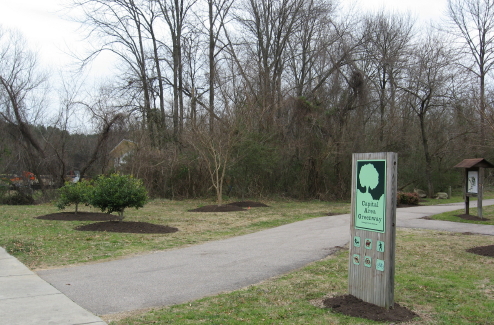
Sue Sturgis at Raleigh Eco News has an excellent post about the new Walnut Creek Wetland Center, which has a grand opening at 5:30 this Tuesday, Sept. 29th.  Raleigh Nature featured the center back in February, describing Frank Harmon’s green design, which Sue explains in detail.

Walnut Creek wetland_1_1

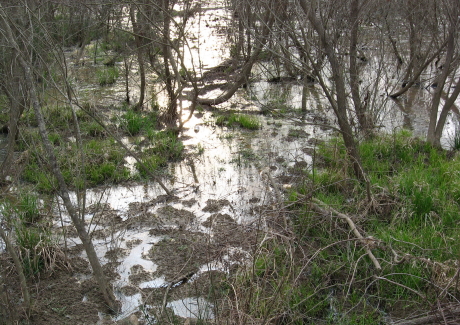
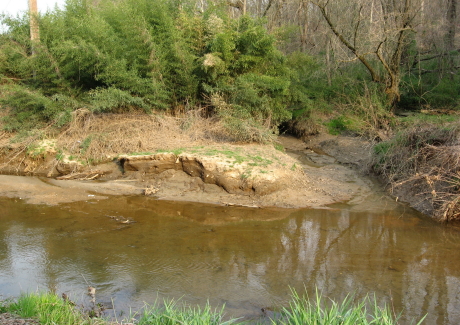
 This stretch of greenway presents some interesting wetland areas, but the largest has suffered from lack of water for the last few years.  I haven’t seen the scene above that wet for a long time – the spot is at the edge of the marsh just below Women’s Prison.  Below is a typical stretch of the creek, which continues to be sand-washed and silt laden.  The new  center is just the focal point of multiple efforts to improve the watershed.

Sandy beach on Walnut Creek east of State Street

Sandy beach on Walnut Creek east of State Street

Info from the center’s website:

Walnut Creek Wetland Center

950 Peterson Street Raleigh, NC 27610

You are invited to come enjoy the center at your leisure, explore our educational displays, wander the greenway trails, relax in a rocking chair on the expansive deck overlooking the floodplain, or ask our knowledgable center staff any questions you may have about the wetlands and wildlife you encounter.

Visitors who want to explore the wetlands more can register for low cost instructional programs. Fun activities for all ages will be offered year-round encouraging the sense of wonder all people feel in their favorite woods, park or local greenspace. Using the variety of natural habitats surrounding the state of the art Wetland Center, park staff will guide visitors in programs that engage students on both a scientific and experiential level. Wetland activities will begin inside the comfort of the center, or on the spacious deck, where visitors will be introduced to the concept of wetlands. The real fun begins when classes take the next step and venture into the wetland to experience nature with their own hands.

Hours of Operation
Tuesday – Saturday 10:00am – Sunset
Sunday 1:00pm – Sunset
Admission: Free

You are invited
Walnut Creek Wetland Center’s Dedication & Open House
Tuesday, September 29th, 2009
5:30-7:30pm
Ribbon-cutting begins at 5:30 pm.
Tours and program demonstrations will follow.

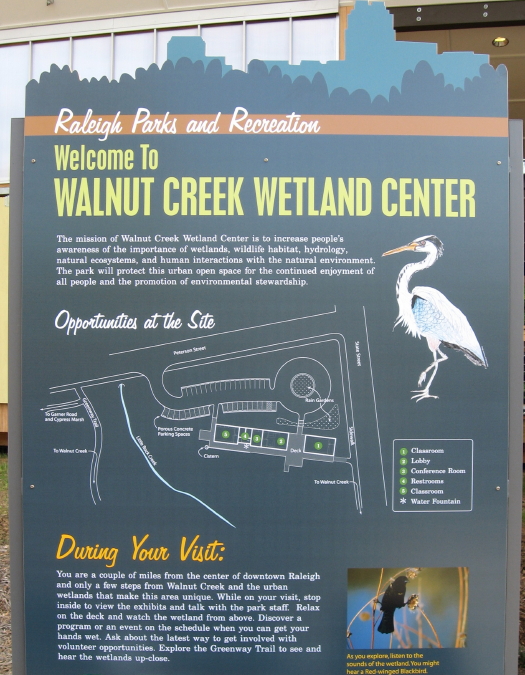
Walnut Creek Wetland Center offers a wilderness experience without leaving the Capital City. Located on 59 acres of undeveloped floodplain near downtown, this new City of Raleigh facility will be the first of its kind.

Sunset at Old Garner Road

Sunset at Old Garner Road

************

Raleigh Eco News also posted some important info recently:

Keep those pizza boxes out of Raleigh’s recycling bins

An important reminder from the City of Raleigh:

So you’ve been putting yogurt cups, pizza boxes, and ceramic cups in your recycling bin. Guess what? The City of Raleigh cannot recycle these products.

The top three containers that residents are putting into their recycling bins which the City cannot recycle are:

* Non-bottle shaped plastic items, such as yogurt cups, bags, utensils, and margarine tubs. The City also is urging residents not to put acceptable items into plastic bags when their recycling bin is full. Instead use a box or other container;

* Pizza boxes; and,

* Non-food glass products such as ceramic cups, vases, dishes, plate glass, mirrors and light bulbs.

This is a great reminder, on a local and general level.  If we really want to change our habits relative to recyclable materials, we have to be a bit saavy about consistent appropriate use of the system.  Just as we can’t take disposal and landfill space for granted, we have to understand the basic processes of recycling and help the process work efficiently and cost-effectively.  Great work and thanks, Sue!

*************

Walnut greenway sign_1_1

Walnut Creek greenway sign

September 24, 2009

Ken Burns Recounts America’s Best Idea

Filed under: About & reflection, Exotica, Greenways & Parks — Tags: , , — raleighnaturalist @ 10:32 pm
The Bubble Mountains_1_1_1

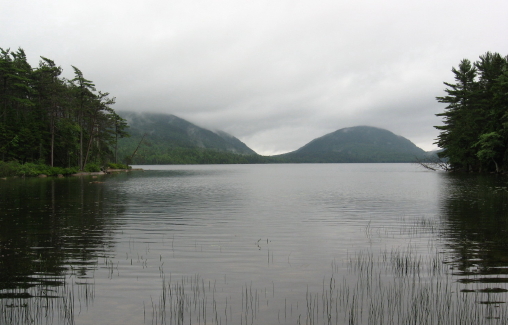
The Bubble Mountains in Acadia National Park

 September 27 marks the beginning of yet another fantastic documentary by Ken Burns that reveals the heart and soul of America.  National Parks: America’s Best Idea is a 6 part , 12 hour series that

tells the story of an idea as uniquely American as the Declaration of Independence: that the most special places in the nation should be preserved for everyone.  The series traces the birth of the national park idea in the mid-1800s and follows its evolution for nearly 150 years.

North Carolina, with a very strong state park system, boasts only the Great Smokies National Park as part of this system; amazingly, the Great Smokies is the most heavily visited national park.  We share the park with Tennessee.  The Great Smokies Park is celebrating its 75th anniversary this year.  This PBS series, which I have eagerly anticipated and urge you to watch, will focus initially on Yosemite, first sighted by white men in 1851 and worshiped by John Muir and many others.  Yosemite was given federal protection by Abraham Lincoln in 1864.

This is the first instance of park land being set aside specifically for preservation and public use by action of the U.S. federal government, and set a precedent for the 1872 creation of Yellowstone as the first national park.     Wikipedia

 As we follow this series on the blog, I hope to find the time to review a relevant and fascinating book:  Humboldt’s Current and the Roots of American Environmentalism.  The evolution of the national parks is an amazing story of very rich people acting not as royalty or capitalists but as Americans.  I look forward to seeing Ken Burn’s take on this, and sharing more about Aaron Sach’s complex book, which traces the influence of Humboldt, a Prussian scientist who was essentially America’s first professional naturalist, on American explorer naturalists such as Muir.

Raleigh Nature posts on the Ken Burns film


September 7, 2009

Brookhaven Offers “Old Raleigh” Nature

heron profile_1_1

I finally got around to finding Brookhaven Nature Park, which is truly hidden away in one of Raleigh’s oldest suburban subdivisions.  Come to find out Scott Reston’s excellent new blog,  Get to Know a Park, covered the spot in July with a nice pictorial post.  With a respectful nod to Scott, here is my own quick take on the park.

Brookhaven Trail_1_1

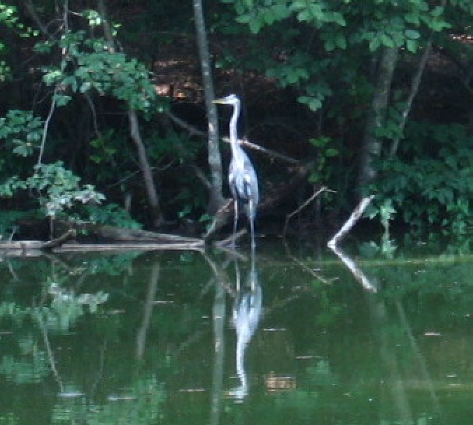
It’s hard to find! The entrance is located is off Rembert Road, off Glenwood.  Brookhaven was begun in 1958 and contains many fairly regal residences with large yards and woodlots surrounding the numerous small waterways.  Scott mentions that the park is maintained by the Junior Woman’s Club of Raleigh, and the few reviews I find online describe it as decidedly low-key as a nature adventure.  But the small pond with a nifty zig-zag deck and the additional decks over wetland area make it a perfectly lovely site, in my humble opinion.  I had fun snapping shots of the heron.

pond at Brookhaven Park

pond at Brookhaven Park

heron at pond's edge

heron at pond's edge

Great Blue Heron at Brookhaven Nature Park

Great Blue Heron at Brookhaven Nature Park

wetland deck at Brookhaven

wetland deck at Brookhaven

The post at Get To Know a Park has some nice photos (and an excellent map!).  It’s good to have some friendly, high quality competition in providing online coverage of Raleigh’s natural amenities.  Those features are more valuable and unique than most people realize.  Brookhaven Nature Park established that tradition well before the greenway system was begun.

***********

Bonus Shot

harassed hawk_1_1

This hawk was being harassed by crows.

« Newer PostsOlder Posts »

Blog at WordPress.com.