The Raleigh Naturalist

September 24, 2009

Ken Burns Recounts America’s Best Idea

Filed under: About & reflection, Exotica, Greenways & Parks — Tags: , , — raleighnaturalist @ 10:32 pm
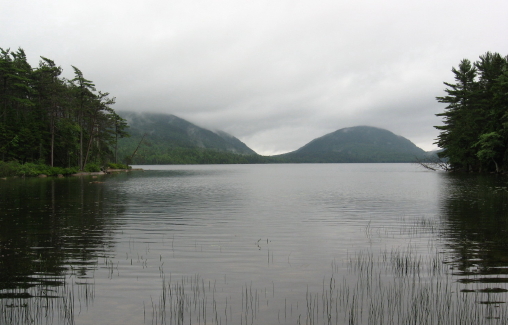
The Bubble Mountains_1_1_1

The Bubble Mountains in Acadia National Park

 September 27 marks the beginning of yet another fantastic documentary by Ken Burns that reveals the heart and soul of America.  National Parks: America’s Best Idea is a 6 part , 12 hour series that

tells the story of an idea as uniquely American as the Declaration of Independence: that the most special places in the nation should be preserved for everyone.  The series traces the birth of the national park idea in the mid-1800s and follows its evolution for nearly 150 years.

North Carolina, with a very strong state park system, boasts only the Great Smokies National Park as part of this system; amazingly, the Great Smokies is the most heavily visited national park.  We share the park with Tennessee.  The Great Smokies Park is celebrating its 75th anniversary this year.  This PBS series, which I have eagerly anticipated and urge you to watch, will focus initially on Yosemite, first sighted by white men in 1851 and worshiped by John Muir and many others.  Yosemite was given federal protection by Abraham Lincoln in 1864.

This is the first instance of park land being set aside specifically for preservation and public use by action of the U.S. federal government, and set a precedent for the 1872 creation of Yellowstone as the first national park.     Wikipedia

 As we follow this series on the blog, I hope to find the time to review a relevant and fascinating book:  Humboldt’s Current and the Roots of American Environmentalism.  The evolution of the national parks is an amazing story of very rich people acting not as royalty or capitalists but as Americans.  I look forward to seeing Ken Burn’s take on this, and sharing more about Aaron Sach’s complex book, which traces the influence of Humboldt, a Prussian scientist who was essentially America’s first professional naturalist, on American explorer naturalists such as Muir.

Raleigh Nature posts on the Ken Burns film


August 9, 2009

David Spain, steward of moss

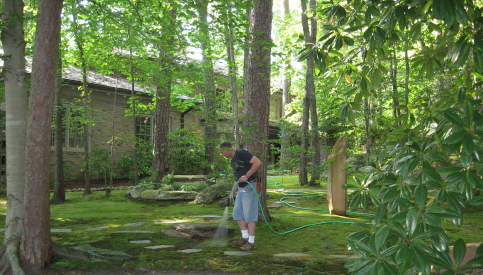
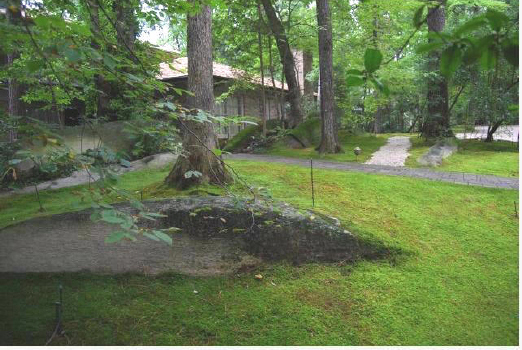
David Spain tends the Urquhart moss garden

David Spain tends the Urquhart moss garden

I recently had an opportunity to document the Southern Living photo shoot of one of Raleigh’s most interesting residential landscapes.  The Southern Living article about the moss garden at the Urquhart residence on Marlowe Drive will come out in about a year – we’ll return to that incredible piece of landscaping, and promote the article, closer to the publication date.  In the meantime, I wanted to introduce Raleigh Nature readers to David Spain, Richard Urquhart’s son-in-law, who has cared for the property since Urquhart’s passing in 2008.  David follows Raleigh Nature and has been very encouraging of my efforts to portray the Lassiter Mill section of Crabtree Creek, which adjoins the Urquhart property.  This post shares some of his photography and offers a sneak peek at the moss garden, which senior writer Steve Bender at Southern Living describes as the finest he’s ever seen.

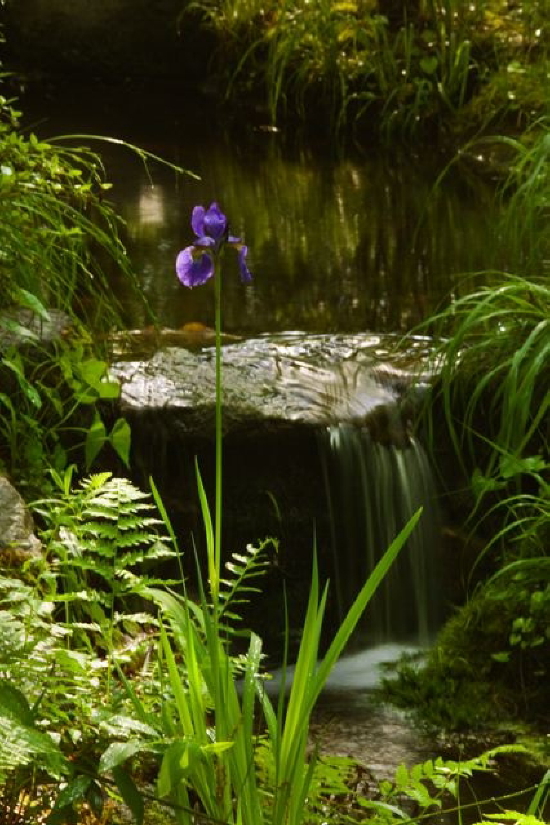
photograph by David Spain

photograph by David Spain

The landscape of the Urquhart residence is unique in several respects, and David Spain is keenly aware of the ecological and geological wonders of the place.  The property slopes down steeply to the deep stretch of Crabtree Creek just northwest of the dam.  There is a rich stand of mountain laurel on the slope, and above the moss garden and water park of large pools, waterfalls, and huge rocks.  The rocks were unearthed by creek erosion out of the slope, and the Urquhart family has pried them out, hauled them up the hill, and used them to create a magnificent setting for the plants and water.

Urquhart backyard area with landscape boulder

David's newest addition with landscape boulder

David puts into Crabtree in his canoe about as often as I THINK about doing it – which is pretty often- and gets some great pictures, which he has shared and consented to have on the site.  Enjoy some great sights of Raleigh Nature courtesy of David Spain, whose hard work and dedication is maintaining one of the most interesting and valuable residential natural areas in central Raleigh.


photograph by David Spain

photograph by David Spain

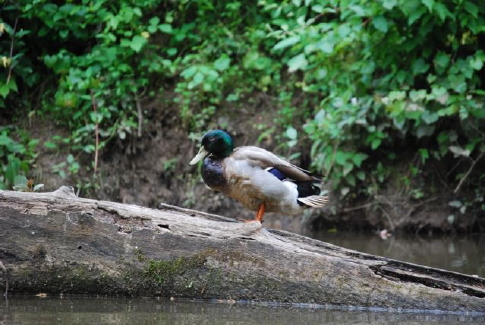
duck by D.S._1_1

photograph by David Spain

photograph by David Spain

photograph by David Spain

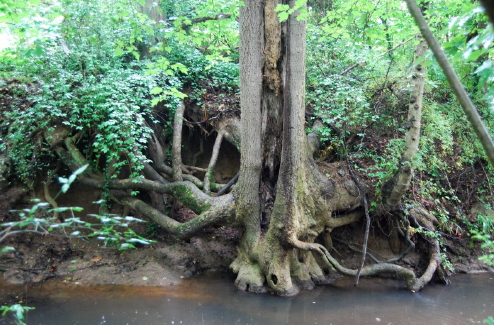
creekside poplar by D.S._1_1

photograph by David Spain

What a brave poplar tree!  David can walk the creekside and offer endless lore and history about the area.  His contributions and friendship have been a big reward for my work on Raleigh Nature.  Below is his picture of the Urquhart front yard.  I’ll share my own photography of the site when it’s time to celebrate the Southern Living shoot, which was arranged by local super-gardener Helen Yoest, whose acquaintance I made at the shoot.  Her Metro feature on the Urquhart garden is a great introduction to the site, and it will be fun to see how Southern Living shows off the garden and David’s meticulous work with the moss.

photograph by David Spain

photograph by David Spain


*************

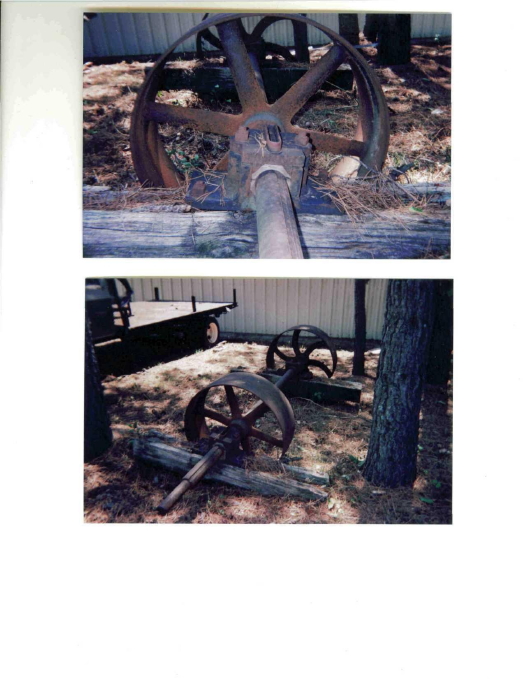
A related fun tidbit:  I received a while back the photo below, which depicts what the senders states are gears from Lassiter Mill.  He asked for advice about who might be interested or what might be done with them.  I thought I would post the picture and give my contacts at the Raleigh History Museum and Yates Mill Park a heads-up.  Any ideas?

mill equipment- photo by Jimmy Gordon

mill equipment- photo by Jimmy Gordon


July 13, 2009

Maine Course, Thoreau on the side

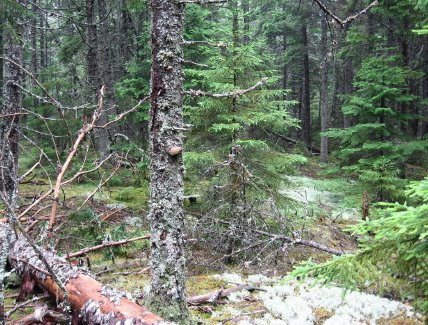
     Cara and I stayed in Bar Harbor, Maine the last week in June, exploring Acadia National Park and the coast of Mount Desert Island.  We had some wonderful nature adventures, and I made use of a unique opportunity to read about Thoreau’s Maine travels while in the context of that landscape.  He traveled there 3 times 1846-57, and wrote essays collected as The Maine Woods.  I purchased a sumptuous guide book based on his trips in Central Maine , and though Thoreau’s travels were inland (mostly traveling by canoe over lake water), he was a great spiritual companion for my Maine experience, especially when I returned home and read my copy of the original Thoreau book.

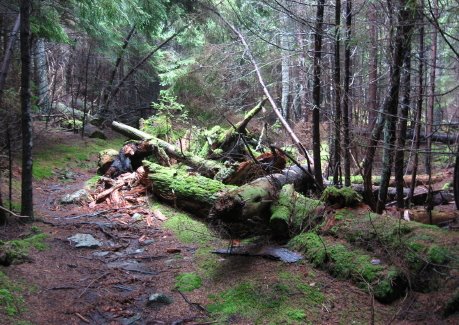
It is a country full of evergreen trees, of mossy silver birches and watery maples, the ground dotted with insipid, small red berries and strewn with damp and overgrown rocks, – a country diversified with innumerable lakes and rapid streams.          H.D. Thoreau, Ktaadn

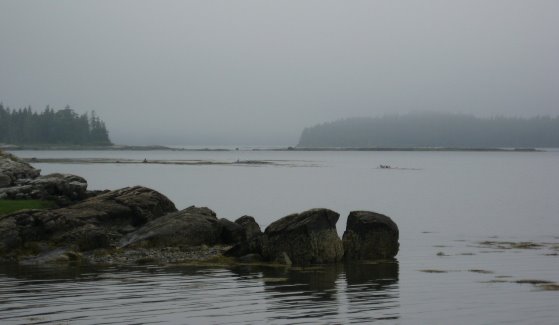
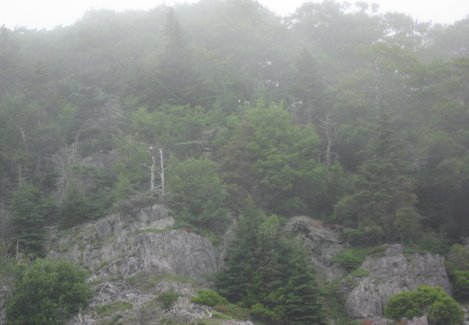
     We experienced terrain much like he describes on our visit to the Blagden Nature Preserve at Indian Point, pictured above.  The Nature Conservancy holds a strip of land that stretches past private properties down to Indian Point, an outcrop jutting into the Western bay that is home to the largest population of harbor seals north of Boston.  We went at high tide and couldn’t see the seals, but we could hear their grunting and jostling through the foggy bay waters.
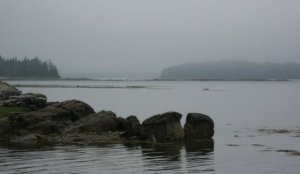
Indian Point, Mount Desert Island

Most of our time in the island’s interior was spent in Acadia National Park itself, which was founded by George Dorr with huge support from John D. Rockefeller, Jr.  Rockefeller loved designing and building roads and bridges, but he didn’t like automobiles much.  The covenant he set on the 47 miles of carriage roads he built and donated still protects the park today.
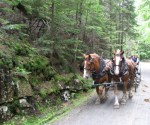
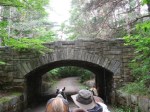
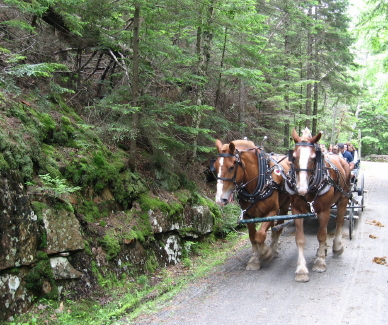
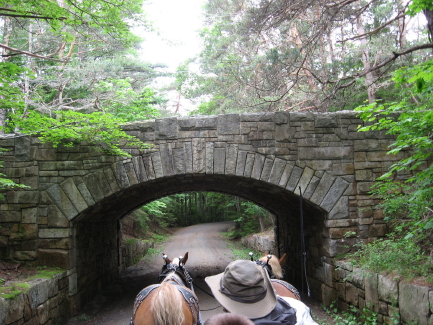
                     Acadia carriage_1_1                Acadia horseman_1_1

The carriage ride showed us 5 of the 14 stone bridges in the park.  Our driver was a horseman from Pennsylvania who uses these horses for logging in the winter and hauls eight of them to Acadia each summer for some productive exercise!
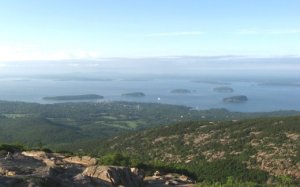
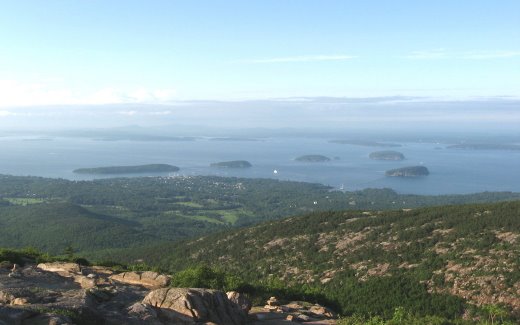
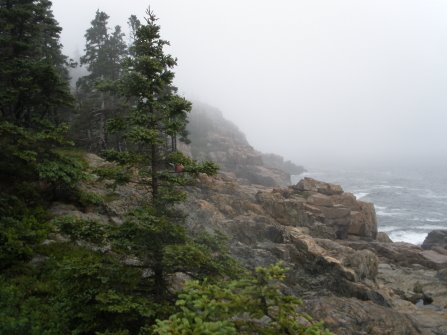
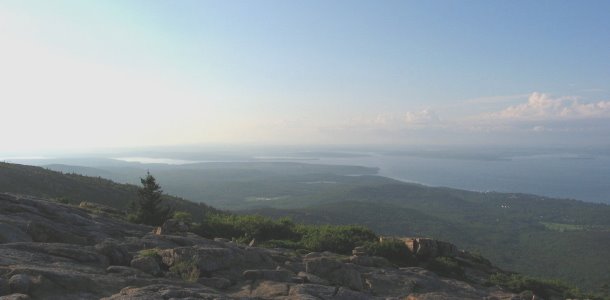
     We did use our car to travel to the top of Cadillac Mountain, the highest point on the huge, glacier-scraped slab of granite that is Mount Desert Island.  We caught a brief respite in the cloudy mists that enveloped us much of the week and were able to see upper Frenchman’s Bay, the location of our cottage, the town of Bar Harbor and it’s namesake island, whose sandbar constitutes an extension of Bridge Street, accessible on foot or by vehicle during low tides, and Otter Point, whose cliffs make the beautiful scene photographed by Cara below.
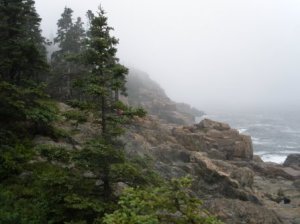
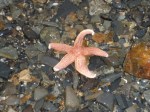
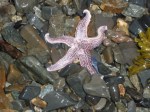
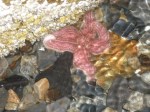
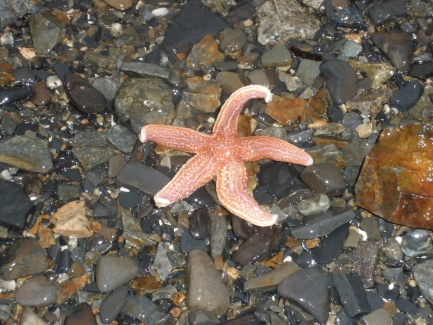
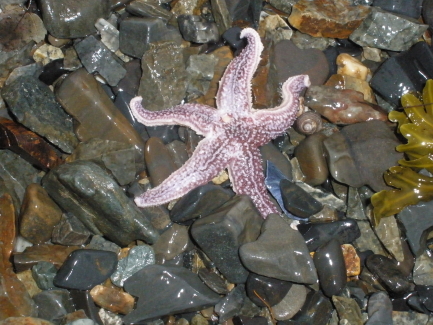
Cara and I are both point-n-shoot folks, but we both had some luck on this trip, displayed in the photo albums linked at the end of this post.  Below is my shot of upper Frenchman’s Bay.  The triangular protrusion just to the right of center is Sand Point, where we stayed.  We could walk at low tide and see all kinds of barnacles, clams and sometimes starfish.
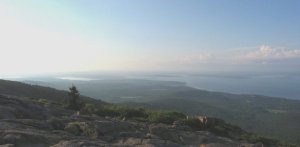
  starfish by Cara_1_1  purple starfish by Cara_1_1 starfish in water by Cara_1_1

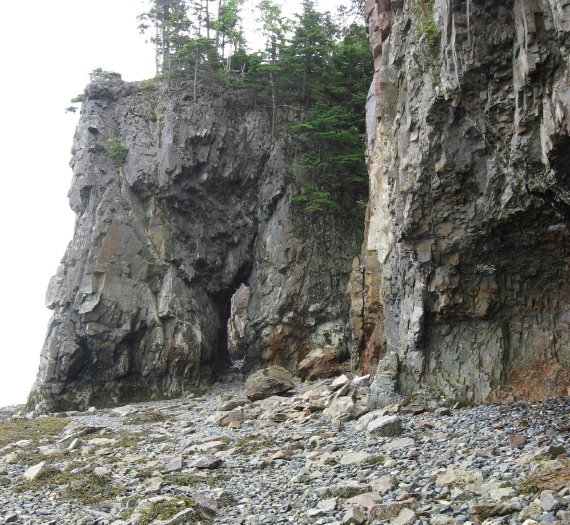
The geology available right below our cottage was also amazing.  We saw smaller versions of the caves and natural bridges to be seen on the bay islands from our nature cruise boat.
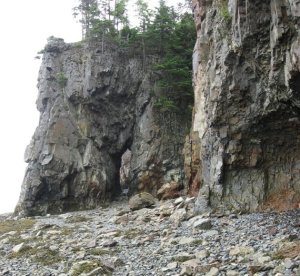
**************************
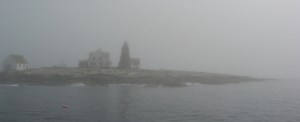
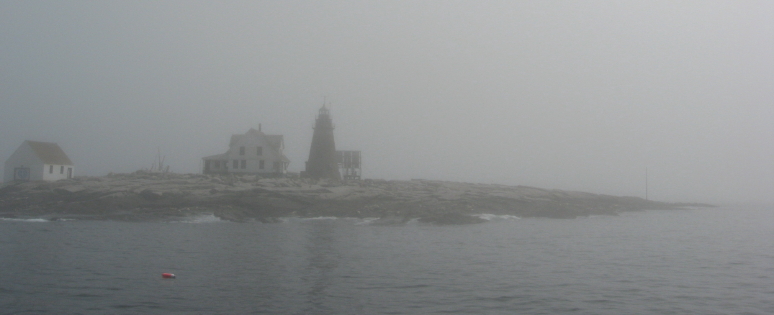
Mount Desert Rock, 25 miles out to sea

Mount Desert Rock, 25 miles out to sea

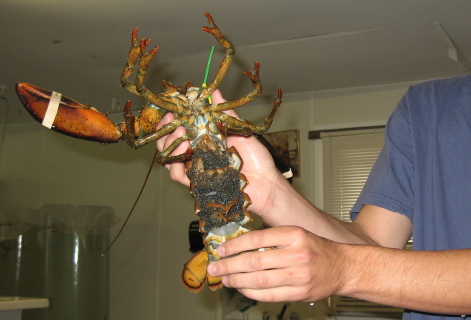
The two boat trips we took showed us no whales (thus the double trip) but lots of interesting sights and tales.  The official (and unsuccessful) whale watch took us all the way out to an amazing outpost on the continental shelf, Mount Desert Rock, whose intrepid lightkeepers maintained their residental post until the late sixties.  We saw lots of harbor seals and some gray seals there.  Our bonus nature cruise was just as foggy, but lightened by the salacious gossip of our nature guide, a grizzled native who had taught biology for 30 years but seemed much more interested in talking about the various owners of mainland and island properties than locating wildlife.   Bar Harbor history and the development and donation of Acadia represents a fascinating portrait of big money, monster money, and the economies of land use. Pre-income tax money built an large array of mansions, styled (50 room) “cottages” by their wealthy summer inhabitants, but almost all burned in a massive 1947 fire and were never re-built.  Modern billionares still have summer homes, but are likely to cooperate with the nature groups in maintaining the natural habitat around them.  Acadia, the first national park east of the Mississippi, was founded by George Dorr, a wealthy wilderness lover whose namesake mountain we half-climbed.  He, Rockefeller and others bought the many thousands of park acres one farm at a time.   The pristine, forested small islands we saw on this trip were bare, sheep-mown homesteads well into the twentieth century, and modern conservation acquisitions focus on these .  As commerce disappeared from the coastal waters and tourism rose as the leading industry, the island transformed from fishing and boat-building villages into Acadia-aligned restaurants, campgrounds, motels and services.  There are still plenty of boats and a healthy lobster fishery, which history we explored at a local nature museum and lobster hatchery.
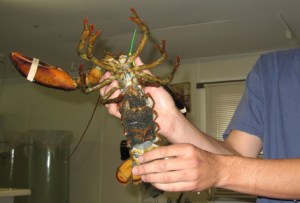
pregnant lobster at Oceanarium

pregnant lobster at Oceanarium

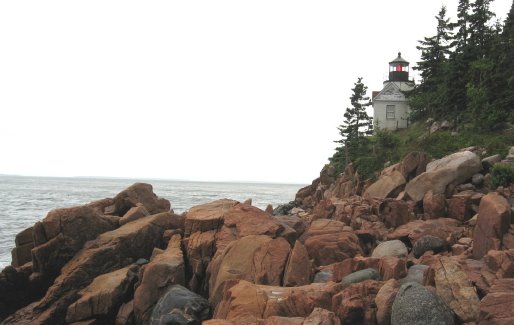
     The main respite we got from tourist crowds ourselves was on the state highways that follow the southwestern portion of the island.  Indian Point was off this road, and we found the prettiest rocky coast at the farthest tip of the island.  Bass Harbor and its historic lighthouse are shown below.
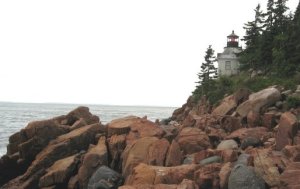
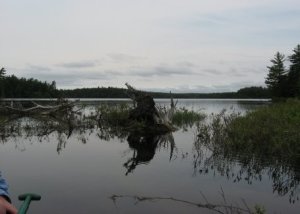
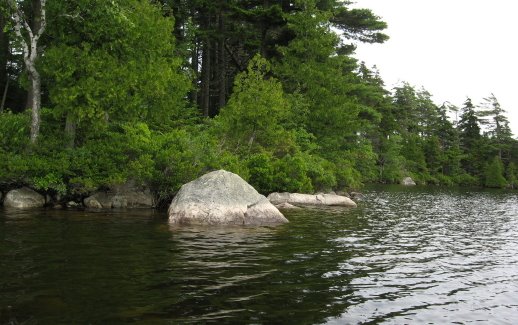
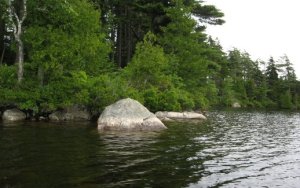
Mount Desert Island is a remnant of mountains that may have been as tall as the Alps, extending 80 miles beyond the current coastline.  The shore is built of granite and metamorphic materials carved and deposited by glaciers up to a mile thick.  The numerous bodies of freshwater are all long, narrow and aligned with the path of the glacier.  We canoed on Long Pond, one of these, and took the pictures below.
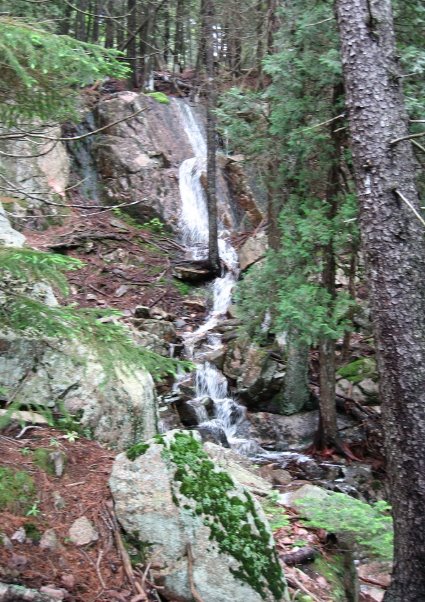
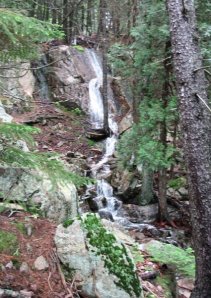
     Somes Sound is another of these long bodies of water but opens to the sea, splitting Mount Desert Island up the middle.  Somes Sound is the only fjord on the Atlantic coastline.  A waterfall that feeds it is shown below.
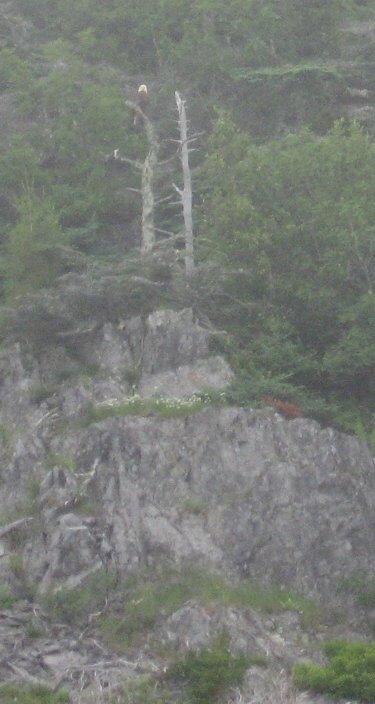
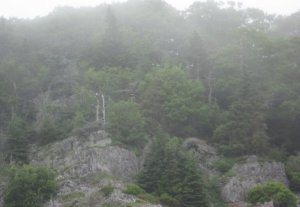
     The trip was adventurous and contemplative, invigorating and still soothing to our teacher souls.  I’ll end with one of the more thrilling sights – a bald eagle perched on the edge of an uninhabited island.  A close-up is at the top of the post.  Please do check the photo albums – many more beautiful sights of Maine.
Maine photo album Part One

Maine photo album Part Two

a wonderful professional set is at sueannhodges.com

*********************

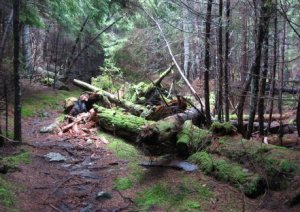
     Who shall describe the inexpressible tenderness and immortal life of the grim forest, where Nature, though it be mid-winter, is ever in her spring, where the moss-grown and decaying trees are not old, but seem to enjoy a perpetual youth; and blissful,  innocent Nature,  like a serene infant , is too happy to make a noise, except by a few tinkling, lisping birds and trickling rills.     Thoreau,  Ktaadn
June 18, 2009

News, Notes and Another Promise

The Natural View

The Natural View

Why I have posted just once a month for 3 months:

Best reason – my new column on nature and environment at Raleigh Public Record.

Very good one: I have been documenting The Bain Project, posting like a madman at Raleigh Rambles.  The Bain Water Treatment Plant has plenty of relevance for Raleigh Nature, as it used nature’s own filtering process – gradations of rock and sand – to clean water drawn from Lakes Raleigh, Johnson, Benson, and Wheeler.  It and the more ancient pumping  station which served as the city’s first water facility sit beside Walnut Creek (more about Walnut Creek below).  Just behind the Bain facility is a wonderful greenway deck that traverses wetlands strewn with swamp mallow,  huge white blooms that startle in a sea of southern green.

Raleigh Naturalist at Bain

Raleigh Naturalist presents at Bain

 Good news: I have more time now, being a teacher, and I also hope to bring Raleigh Nature readers some neat photos from our anniversary weekend in Charleston and our upcoming trip to Bar Harbor and Mount Desert Island.  My promise is at the end of the post.

Walnut Creek greenway at Rose Lane

Walnut Creek greenway at Rose Lane

Lots of happenings around the greenways.  The section that follows Walnut Creek  parallel to Poole Road got flooded Tuesday June 16, along with Rose Lane and other roads near the creek.  The NandO story about the flooding was being followed up the next day by Josh Shaffer, who I met walking Rose Lane when I went to photograph the high water on the greenway. He was hoping to chat with some of the folks who are stranded by high water once every year or so at this dead-end extension of Rose Lane across the creek. I remember quite well my teenage years when Rose Lane dead-ended into a meadow well short of the creek, because we used to drive down there to park in what seemed like deep country in the sixties. Whoever decided to build houses past a perennial wetland with no outlet is the real problem, but the curent residents are facing the consequences.   Josh covers lots of interesting stuff for Nando, from Legos to beloved beer slingers to taking small children to play in cemeteries.  His recent story on kayaking Crabtree Creek   really struck a chord, with its realistic description of the grit, mud and smells encountered on the creek, but I prefer the much quieter section of Crabtree above Lassiter Mill for canoe jaunts.  Getting back to poor Walnut Creek, the heavy rains that caused flooding also sent 15,000 gallons of untreated sewage into the creek upstream in Cary, but the Nando story said no fish kills had been reported.

sliders at Yates Mill_1_1

Newsflash from NandO:  the 4 inches or so of rain also did damage at Yates Mill Pond, pictured above, which has temporarily closed the millsite and trails. Repairs are expected soon.

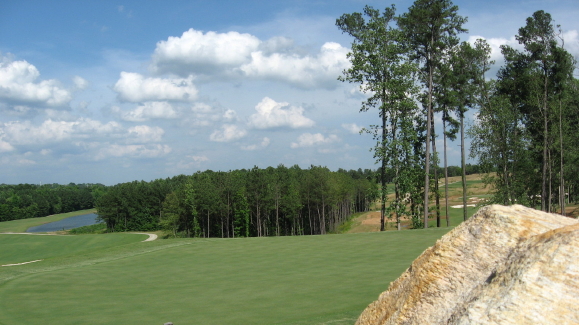
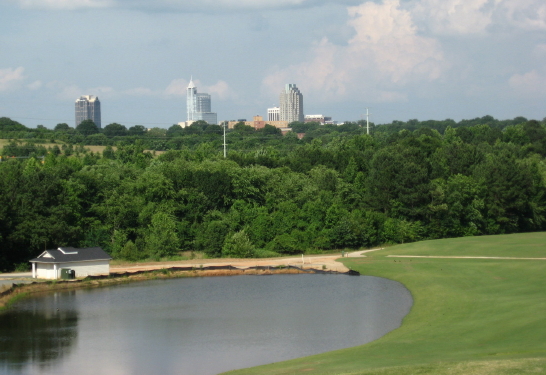
Lonnie Poole golf course_1_1  The new Lonnie Poole Golf Course around Lake Raleigh is mostly finished and expected to open in July. I posted dismal views and comments about this project in February 08, but when I stopped by recently I felt a little better.  There are lots of wooded buffers, especially next to Walnut Creek, and I must admit the course is looking pretty.

Raleigh skyline from Poole Golf Course

Raleigh skyline from Poole Golf Course

The Fletcher Park water garden is being fine tuned.  Apparently the water level, though quite low down in the retention ponds, was too high for some of the plantings, so a crew came in and extended a kind of penisula of land into the lowest pool, as you can see below.  The crew that explained this to me were taking survey sightings to appraise the work that had been done.  Many of the original plantings had been shifted to higher ground.

new Fletcher peninsula_1_1

The ponds still look pretty muddy to me, but I know time will do wonders. They had an opinion on one item that had been bugging me since the NandO article – springs.  There are no active springs in Fletcher Park, just surface water from the neighborhoods and seep from the ball fields.  Fletcher Park’s lilies are in full bloom!

Fletcher lilies_1_1

There!  All the nature news fit to post.  I can’t promise any certain frequency of posts, but I promise to stay totally committed to getting fresh postings up about nature and wildlife inside or near the beltline.  See you on the greenways!

March 2, 2009

March Mad Beauty

snowy-oakwood-trees_1_1

   A late snow and a schoolday off to blog about it!  It didn’t take long to find a snow paradise.  The Oakwood Inn’s block sported the lacy treetops above.  But I was headed to the greenway.  I decided to check out an old favorite – the east end of Buckeye Trail.

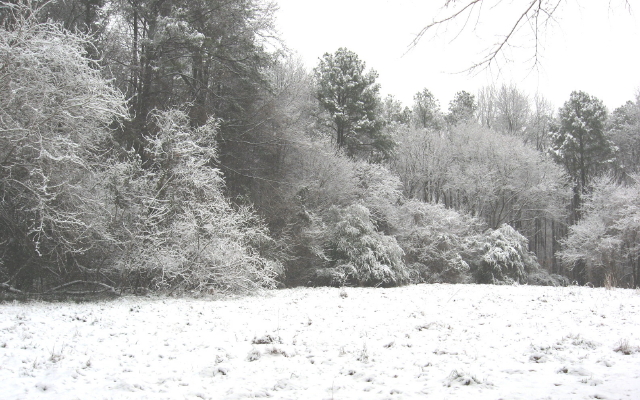
   This wonderful view is the edge of the meadow at Buckeye Trail’s east end off Milburnie.  Down this oldest section of Raleigh’s greenways is a vista that provoked one of the first thoughts that originated this project – and it was a book project long before I ever knew what a blog was.  The scene used to look like a cathedral of treetops – but the loss of a huge red oak several years ago changed the look.  What’s left is seen below.

   The missing tree was on the right, and when it was there, I was ready to write a book partly to tell people to come here and take a deep breath.  It is still a very nice section of greenway.  I got to see the baby beeches of a couple of posts ago in a new light, literally.  The gentle snow provided a chance to see water moving across the greenway: in a freshet, and being blocked by the asphalt.  The creek was medium high, which I documented with a current shot of my favorite log-sitting spot.  Once I had done that, I knew I should head over to Hodge Road and take shots of my water level standard spots, which I’m documenting over on the nature projects blog.

snowy-landfill-meadow_1_1

The March snow was mighty pretty!

February 22, 2009

News, Notes, and Promises

Walnut Creek greenway at Wetland Center

Walnut Creek greenway at Wetland Center

 Walnut Creek Wetland Park is approximately 59 acres in size and is located between Garner Road and South State Street and south of Peterson Street in Southeast Raleigh. This site contains extensive wetlands that are located near the downtown urban center and offer an opportunity for the public to easily explore and learn about the value and significance of wetlands for water quality and wildlife habitat.     Raleigh City website

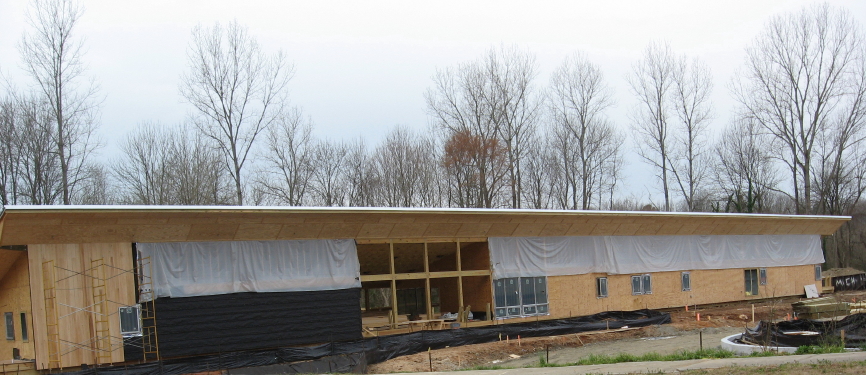
      Construction has begun on  the  Walnut Creek Wetland Center, as reported in NandO on February 11.   The center is the culmination of efforts led by Norman Camp to rehabilitate and protect the wetlands of Raleigh’s Southeast.   This topo map shows the area. The new building, shown below, was designed by Frank Harmon, and will stand six feet above the ground and have a minimal ecological footprint.  An earlier post describes some amenities of this section of greenway.

                         walnut-center-side_1_1                         walnut-wetlands-center-front_1_1

*************

henbit-on-hodge-rd_1_1

    The groundhog definitely saw his shadow, but early signs of spring abound in Raleigh.  Above is henbit between Hodge Road and Crabtree.  Below are red maples blossoms in Oakwood.  There is some cold air coming, so there will be some casualties – though our well-mulched garden parsley and “spinach under glass” on the deck are doing great!

winter-maple-buds_1_1

*************

     One of the exciting things about Raleigh Nature is the wonderful reader input, and I need to follow up and post about more of it.  There’s always a tension between getting around to it and doing it justice.  Here are a few smoldering issues on my draft posts:

First and most behind: responding to the multiple inputs about Lassiter Mill and Raleigh mill history.  From David’s great pics of the upper water, to the amazing Lassiter mill drive wheel images sent by Jimmy, and the history and memories in the comments, we need to return to this subject soon!  I recently got a fascinating inquiry from Carol about the infilled Lake Boone, and the natural springs that fed it, and I want badly to follow that up.  I very much appreciated the mistletoe tips from Meredith, and dream of my “pecans and mistletoe” map of Raleigh!  Scott, a well-known author, my old friend Joe, and Tommy, a songwriter from my past, all greatly helped my still-unfinished exploration of the Pigeon House Branch system and the expensive new Fletcher Water Park that feeds into it.  We’ve been blessed with an explanation of Raleigh Swamp’s waters by Mark, who engineered it, and we’ve been sobered by the plea for resolution from Deborah concerning Ward Transformer’s lifetime of ecological crimes against our area.    I look forward to sharing Patti’s wonderful hawk story, and keeping Michiel in the Netherlands all caught up on Raleigh’s natural scene.  Mentioning these highlights, many thanks to all who have written or commented.  It really helps the work!

**********

Oakwood maple

Oakwood maple

     Chris Crew and Matthew Brown just wrote a wonderful article about Oakwood wildlife for our neighborhood newsletter.They are neighbors at the bottom of the slope at whose crest I reside. Between my house and theirs almost every inch is controlled by humans, and the water flowing downhill is piped or culverted.  Below their house, toward Brookside and Glascock, the land opens up just a bit and has some natural edges. As a matter of fact, Chris is uncovering  the section of Grassy Branch in his backyard, and that’s another topic on my to-do list.  Just across the road, though, is Oakwood Cemetery, a significant oasis for many living things.  According to their article, our neighborhood boasts a huge variety of species. Among many bird species they describe, the cedar waxwing invasion for berries and the long-standing nest of red-tail hawks stood out.  Foxes, possums, and a substantial population of raccoons are described.  There are excellent nature lore tips regarding the colors of 5-lined skinks and owl sounds.  I wish the newsletter were online, but if you have a friend that’s a resident, check it out.  Way to go, Matthew and Chris!

PS:  Hope ya’ll like the revised sidebar.

PPS: Matthew very kindly posted the article referred to above HERE.

« Newer PostsOlder Posts »

Blog at WordPress.com.