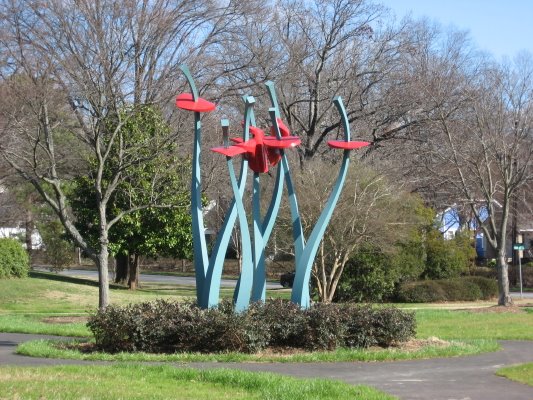
The Raleigh Naturalist

January 15, 2009

Fletcher Park Meets Top and Bottom

Filed under: Central Raleigh, green initiatives, Greenways & Parks — Tags: , — raleighnaturalist @ 2:43 am

   Fletcher Park’s new water garden has been finished, as well documented in a News and Observer article by Tommy Goldsmith.  Mr Goldsmith kindly quotes me about the site:

John Dancy-Jones, a science teacher at Fletcher Academy, has been keeping up with the water garden on his blog at www.raleighnature.com.

“The greenway path beside the water winds around and unifies what used to seem like a very bifurcated setting,” of the park’s upper and lower levels, Dancy-Jones said.

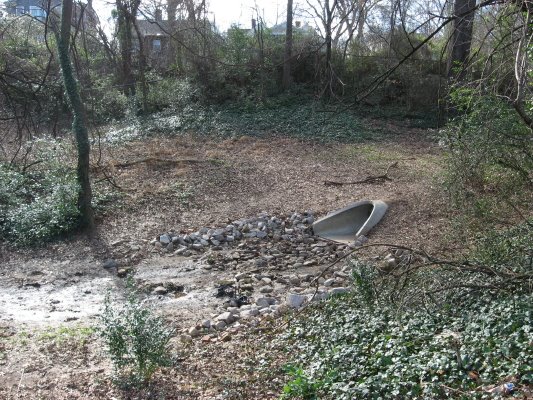
The purpose of the water garden is to slow and filter the water being drained into Pigeon House Branch, down the hill at Capital Boulevard.  Mr. Goldsmith did not quote me on my main reservation about the project, which is that our notoriously low water flow periods might render the ponds stagnant and perhaps slow to fill in the first place.  He stated in a phone conversation that  several springs had been discovered during the course of construction.  I have high hopes for this water garden , but the photo below seems to show seeps rather than springs in the highest portion of the water garden proper.
    What Mr. Goldsmith does do is start his article with a wonderfully appropriate joke about residents of a new $710,00 residence (the mallards in the largest, lowest pond).  Ironically appropriate because the need for this system, paid with mostly state and EPA funds, was created by the dense, impermeable developments right across the street from the park.  But if the designers accomplish their goal – a balanced wetwater ecosystem with rich food chains that keep down mosquitoes, then Fletcher Park can become a gem that represents a small scale model of what will probably happen in the end at Dix: development, and compensation for it that provides valuable amenities for all.  The N&O article cites science evidence that the system is already benefiting Pigeon House Branch, and that waterway needs all the help it can get.
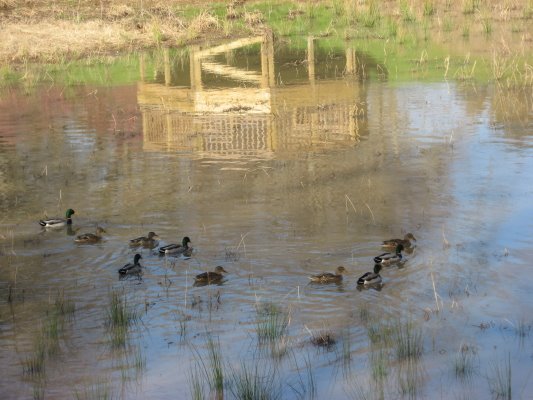
Above, the expeditious mallards. Below, looking toward Glenwood.
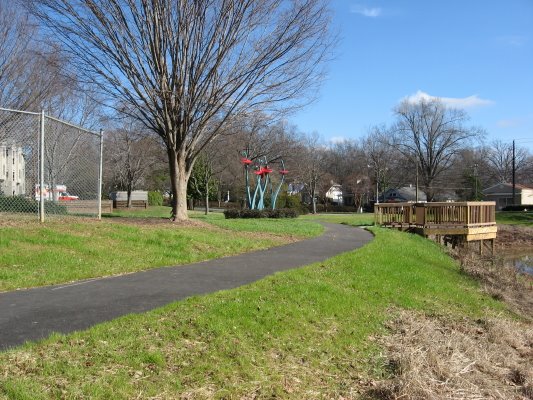
Photo tour of finished water garden

 previous posts on Fletcher Park:
September 3rd, 2008

March 23, 2008

November 1, 2008

Slow Fall at Dix


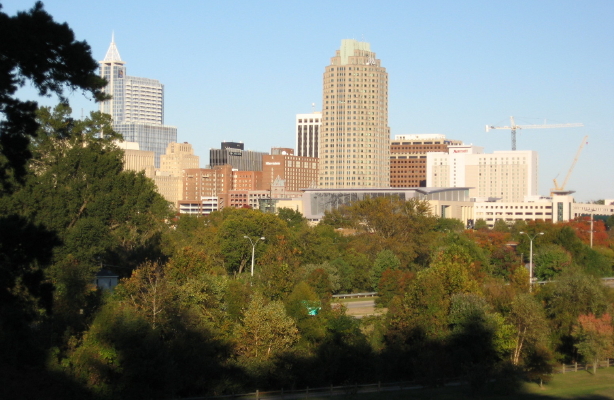
Raleigh from Dix Hill

Raleigh from Dix Hill

 Dorothea Lynde Dix (1802-87) was perhaps the most famous and admired woman in America for much of the nineteenth century. Beginning in the early 1840s, she launched a personal crusade to persuade the various states to provide humane care and effective treatment for the mentally ill by funding specialized hospitals for that purpose.

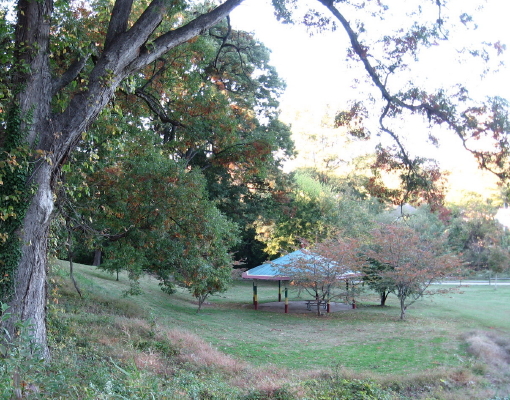
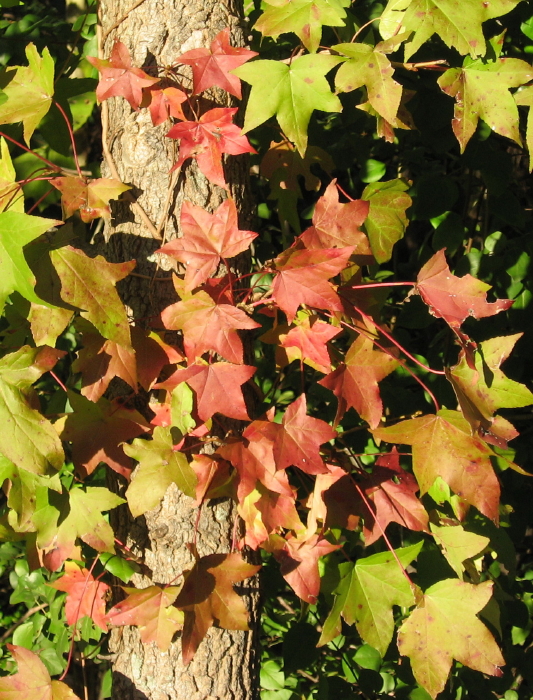
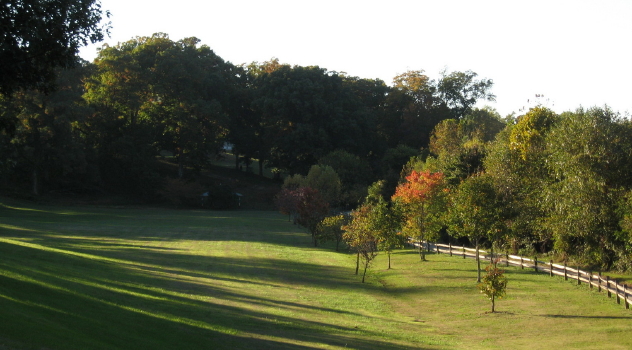
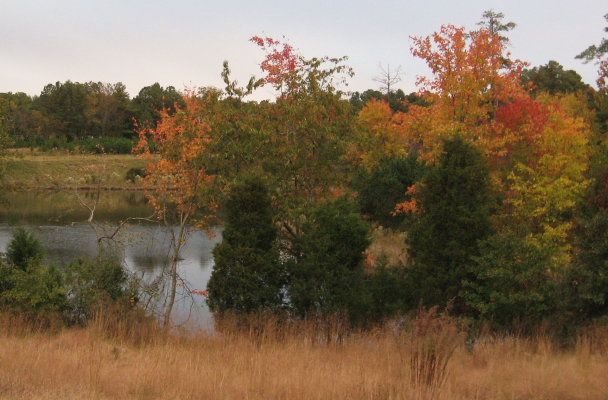
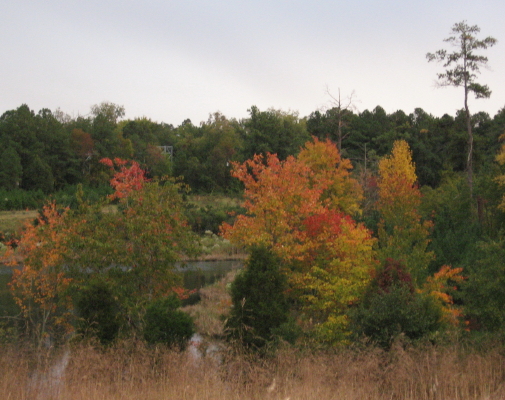
     306 acres are left from a huge estate that was given over to the benefit of some of our neediest folks.  As the fall colors take their time this year decorating Raleigh’s skyline, so Dix Hill’s fate lingers in the slow balance of state decision.  Walk the big meadow with me and glimpse some early fall colors.

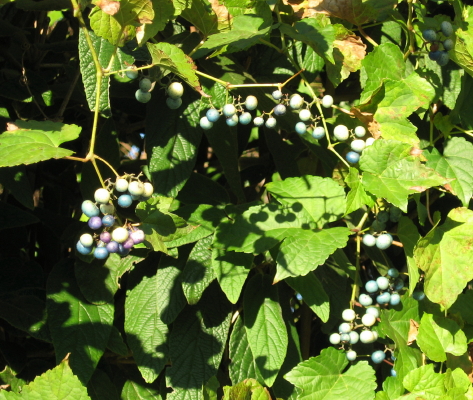
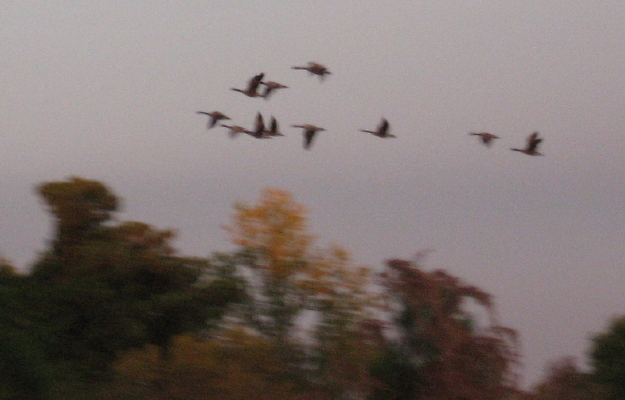
   We turn from downtown and look down at the gazebo and greenway path which runs along Rocky Branch as it follows its new, straightened course beside Western Boulevard.  On that walk we’ll see lots of elusive birds, wild grape, and some small spots of fall color.

     The campus has many historic buildings, massive white and red oaks that ring the meadow, a small grove of highly productive pecan trees, and one open slope that is the joys of all sledders.  Centennial Campus and the Farmer’s Market have already taken the lion’s share of what once was .  Now the state needs to let Raleigh’s long term interests take precedence over a short-time cash windfall.  The folks at Dix 306 are working hard to make that happen.  We should support them any way we can.

     Below is a trace of fall glory in midst of a glorious lingering summer.  Hopefully this image does not represent the sunset of hopes for the landscapes of Dix Hill.

****************

   I went on this walk partly because of Ashley Sue over at Green Grounded, who complimented me in anticipation of seeing fall colors on Raleigh Nature.  Below are clickable thumbnails of some other sightings at Jones lake off Sunnybrook, and then ending with my all time best fall picture, from the west Beltline.  Happy leafing!


September 3, 2008

Fletcher Park water feeds Pigeon House Creek

Filed under: Central Raleigh, green initiatives, Greenways & Parks — Tags: , , , — raleighnaturalist @ 10:10 pm

There is not a lot to update on the earlier post about Fletcher Park’s new water park, which remains in a distinctly unlovely stage of construction, but this project is interesting from several angles and seems worth another look.  The large cavities being excavated from the red clay are designed to hold the water headed down to Pigeon House Creek, which is the long-suffering waterway that parallels Capital Boulevard as it flows north toward its intersection with Crabtree Creek at Raleigh Swamp.  What look like huge pits will allow the water to deposit sediment and be filtered by plant activity before flowing on down the hill.

      A nice description of the benefits, which include hopes for “A new ecosystem for this area of the park [with] butterflies, dragonflies, and frogs, among other animal species,  ”  can be found at The Raleigh Connoiseur.  But that post was in May, and the plan was for the water garden to be finished soon after.  But there it sits.  The upper pool shown below will cascade or slide down to the larger lower pool.

      This site was a Methodist orphanage, built in 1900 and still operating well into my lifetime.  The City purchased the property in 1982 and named the park for A.J. Fletcher’s recreation-loving son.  Fred Fletcher was inducted into the Raleigh Hall of Fame in 2007.

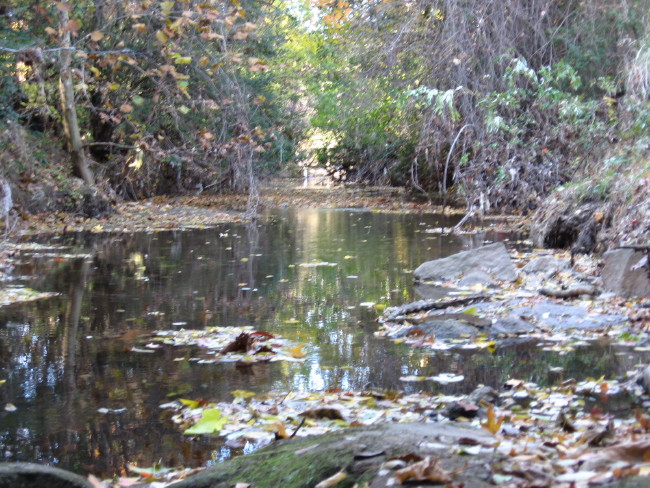
     The outlet seen above is the water’s exit toward Pigeon House Creek.  From this point the water dives underground and is piped under the railroad line and across N. West Street.  I cannot find a spot to view that intersection yet.  Below is a  picture of Pigeon House Branch just downstream.  We will follow it’s grim journey down Capital sometime soon.

Fletcher Park and Pigeon House Creek photo album

August 13, 2008

Ward Transformers – Crime Never Stops Hurting

Filed under: Crabtree Creek, Gems & Surprises, green initiatives — Tags: , , , , — raleighnaturalist @ 2:09 pm

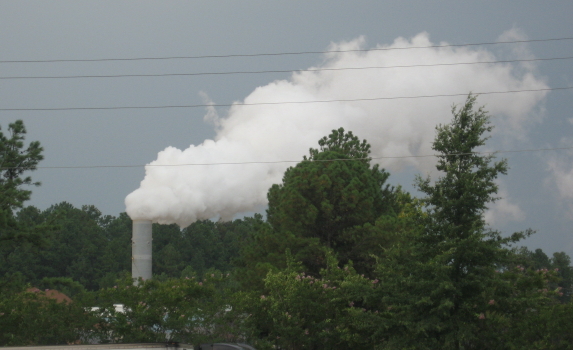
     A recent N&O story reminds us of the reason for these signs, posted all along the Crabtree system:  our city’s water system is tainted by PCBs (polychlorinated biphenyls), a toxic chemical released over many years by the actions of Ward Transformers, a company whose name is etched in the annals of NC corporate crimes, a company STILL OPERATING next to the Superfund site next to RDU airport, where its buried load of poisons is slowly being incinerated through the process pictured below.

Ward Transformer site

Ward Transformer site

Ward Transformers has a long history of environmental crimes in North Carolina.  Long before the discovery that it’s open burning of materials on site to recover copper had applied PCBs to the soil surrounding its plant, Ward Transformers and its contractor, Robert Burns, were found guilty of dumping PCB-laced waste along miles of rural NC highways, using a specially designed dumping apparatus constructed at Ward Transformers.  Burns and “Buck” Ward spent some time in jail, but at some point the EPA or someone in government realized that a bankrupt company couldn’t help pay clean-up costs, so Ward Transformers was left in business.  The state of North Carolina had to scrape up the roadside deposits and figure out what to do with them – leading to a separate whole nightmare with the landfill in Warren County.

That was way back in 1978.  The next year, EPA tests show contamination in the soil around the plant itself.  In 1993, preliminary Superfund action was undertaken and in 2002 it was declared a Superfund site.  Yet much local outcry and promotion took place before clean-up work was begun.  Now, according to the newspaper report, the work is being done, and in a safe manner. Yet concerns remain about the process, as well described in this post at Raleigh Eco News.  I went out to look at the site.  The EPA’s clean-up incinerator really puts out a huge stream of white smoke – apparently almost all water vapor.

     Thank you for listening to my rant.  It just drives me crazy that ole Buck Ward spent a few months in jail and now his company rolls merrily along, though I presume they send a hefty check to the EPA each month.  We will never fully recover from these actions in my lifetime.  And we will never figure out the “best” way to punish such transgressors – justice and reparation are both so tough to achieve.


25th anniversary of PCB Landfill protests

*************

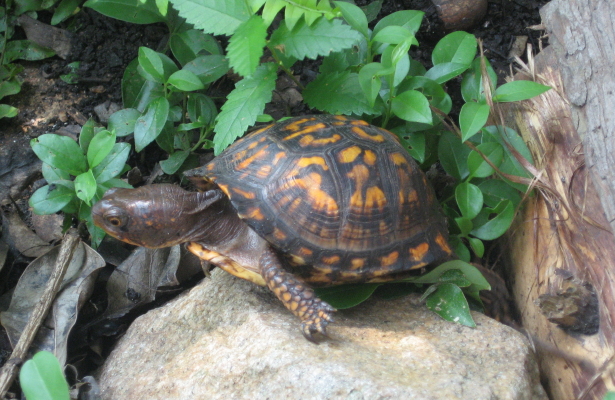
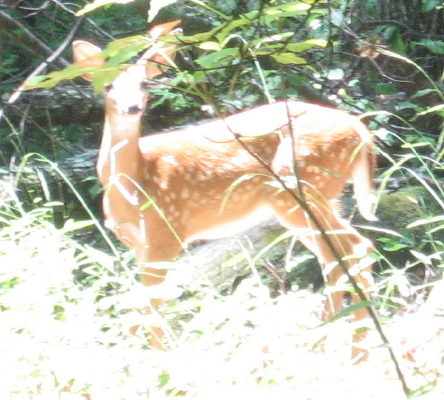
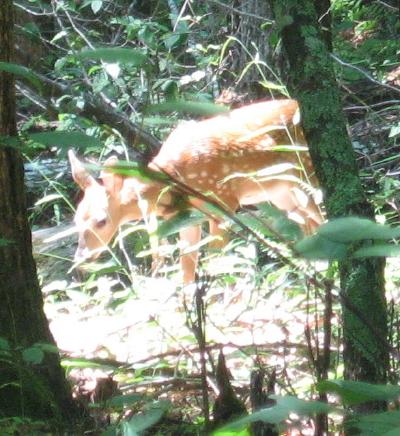
As a balance to the above, please enjoy a juvenile box turtle living in our garden and a fawn Cara and I saw on a trip last weekend.

December 30, 2007

Dix Hill and the making of a world class city

Filed under: green initiatives, Greenways & Parks, Pecans & Mistletoe, South Raleigh — Tags: , , , — raleighnaturalist @ 4:11 pm


The oak grove above will probably survive whatever is to come, but the old “Dix Hill” where I went sledding has already been truncated by Centennial and the Farmer’s Market, and is now being fought over like a scrap thrown between dogs.  I realize there is going to be more development of some kind,and that the state will hold on to some space – as a matter of fact, the Dix hospital employees I talk to say they don’t expect to leave.  It makes sense for some portion – the juvenile part, say – of the mental health facilities to remain. I am not an activist but I’m glad the Dix group is working so hard to save what they can.  The truth is, the magnificent lower meadow, surrounded by majestic oaks, with Rocky Branch edging it, is the prettiest place inside the beltline.  A park here would go a long way toward establishing Raleigh as the true and enlightened city of oaks.

rocky-branch-at-dix_1_1.jpg

Rocky Branch above, Dix Hill pecan trees below


« Newer Posts

Create a free website or blog at WordPress.com.