Historic Photos of Raleigh-Durham. Dusty Wescott and Kenneth E. Peters. 2007. Turner Publishing Company. Nashville, TN.

I was delighted to receive Raleigh Nature’s first ever review copy of a publication, and even more pleased to see such a sumptous coffee table book in my hands. Well constructed and beautifully printed in black and white, the images and captions are a treasure of information, memories, and comparisions. The museum staff who worked on the book did a wonderful job of selecting the images and writing captions to place them into context. The final product, part of a series from this publishing house, has some real oddities in its organization and framework, but these probably won’t bother you unless you are a native of Raleigh or Durham. Historic Photos of Raleigh-Durham gathers fascinating images of both cities into a scrapbook that displays but doesn’t define the histories of these two quite different cities. The organization of the book, unfortunately, follows the perspective of the publisher rather than the writer.
************
The split personality of the book emerges in the first pages. The publisher, Todd Bottorff, states that “Raleigh-Durham is looking ahead and evaluating its future course.” He encourages readers to use this book to help them reflect “as they go walking in Raleigh-Durham.” He seems to be using a preface template for the series and filling in the name he sees on the front: Raleigh-Durham. The introduction by a local historian quickly apologizes for this perspective, blaming “media marketing, modern census figures, and a shared international airport” for the perception of two of the Triangle’s three cities as a single entity, and pointing out the fact that Raleigh and Durham are distinct and unique.
***************
Enough of these quibbles! – for now. This large glossy book is full of delicious treats. The “chapters” consist of photos from several decades, with intriguing titles such as “Tobacco Trust and Trolley Cars” (1900-1919) and “Let Freedom Ring Along Tobacco Road” (1940-1965). Single page introductions to these sections offer a smattering of trends from the era for each city. The natural history of Raleigh gets its due. The Raleigh Light Infantry lined up on Morgan Street in front of the Capitol in 1875 shows young trees I think I recognize as today’s giants. The oxcart in a Capitol view from the opposite side in the early 1880s shows large mature trees that are long gone. A blizzard and a flood in 1899 are depicted in images that relate directly to nature in past Raleigh. And natural history aside, any Raleigh native will enjoy looking at images like the newly opened Broughton High School, with Peace Street a dirt path and the Cameron Village area a deep forest. This was in 1929, just before the Raleigh Civic Auditorium burned, and was quickly replaced by Memorial Auditorium. This was during the Depression, of course, and though I knew my grandfather and many others were secure throughout the Depression because of the railroad, I didn’t know Raleigh’s civic building program fared so well.
************
Durham gets nearly equal coverage. The images of the Duke homestead and rural -looking tobacco factories complement picturesque memories of early motorcycles and tree-sitting contests. Durham, which I was surprised to learn was not incorporated until 1869, is characterized as strongly influenced by tobacco and Duke University, but the book’s images also convey Durham’s blue collar and African American influences. Road-building between the two cities and early airports gets good representation. But the photographs associated with a given theme are scattered throughout the book. Raleigh and Durham images appear side by side. Photographs of a single subject will appear pages apart. If you are doing anything other than random browsing, the lack of order and cohesion in the content is disconcerting. It is as if two local folks were hired to gather archival images and write captions, and then someone in say, Paducah, Kentucky, gathered them and laid out with only one idea – “look nice.”
************
The book looks quite nice indeed. The arbitrary and sometimes truly odd juxtapositions can perhaps be provocative in a positive way. I have never seen most of the images before. I am glad to have the book, and recommend you buy it, if you have a strong interest in the area, or like nice coffee table books. And perhaps we can learn from our unenlightened publisher: The Triangle is an emerging mini-megapolis, whose borders are blending. Raleigh and Durham will always have a strong separate identity, but the world is working out how to classify us. RDU, RDC, Raleigh-Durham – these are all labels trying to capture who we are. This book gives us many wonderful images of who we were.
The authors of this book will be present at Borders on E. Six Forks on June 7, 2007
**********************************************
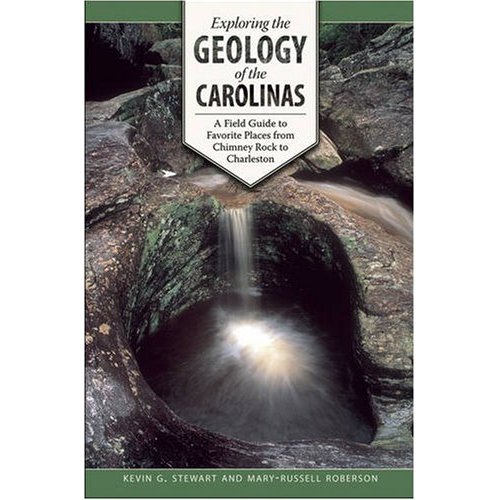
Exploring the Geological History of the Carolinas. A Field Guide to Favorite Places from Chimney Rock to Charleston. Kevin G. Stewart and Mary-Russell Roberson. 2007. UNC Press, Chapel Hill, NC.
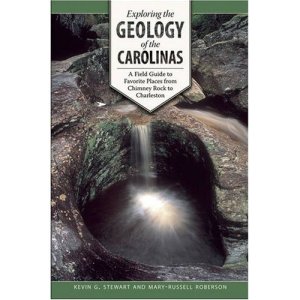
This is a magnificent resource for understanding the land in which we live. I rank it with Michael Godfrey’s Field Guide to the Piedmont as an eminently readable popular introduction to a complex field of information. The introductory chapters make geology seem important to you as a resident of the Piedmont. If you choose or need it, they can provide the basic geology concepts needed to appreciate the book. Most of the book, however, is devoted to the geological context and significance of prominent and popular natural areas. It is indeed a field guide in the best sense – a book to carry with you as you explore some of our finest natural areas.
**********
The field trips offered are an outstanding selection. My favorite spot on earth, Linville Gorge, is featured as an example of “spectacular geology” to match its scenery. The seventeen pound gold nugget that led to gold mining in North Carolina is connected to the fantastic geological tale of how pieces of Gondwana, the ancient super-continent, ended up in the Piedmont, with its gold-filled quartz veins intact.The dramatic 800 foot rise in seas and oceans evidenced by the Cliffs of the Neuse, is described in seamless harmony along with Tuscorora ceremonies, iron-clad warships and moonshining. The essential focus, however, returns to the image of the cliffs, whose geological existence will be brief, as the remnant of the greatest global warming event ever experienced by the planet.
***********
Geology can be difficult for anyone, even a dedicated naturalist. This book explains the concepts through immersion into the geological contexts of our favorite nature sites. It strongly connects the history with the observable features of the landscape. The result is an education travel guide that gives you all the more reason to visit, explore and contemplate these beautiful spots.
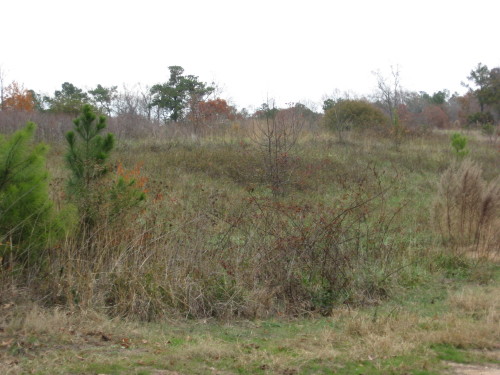
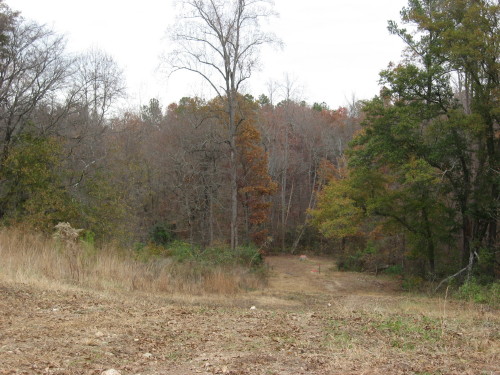
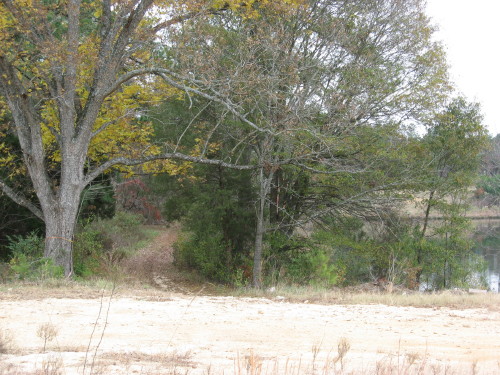
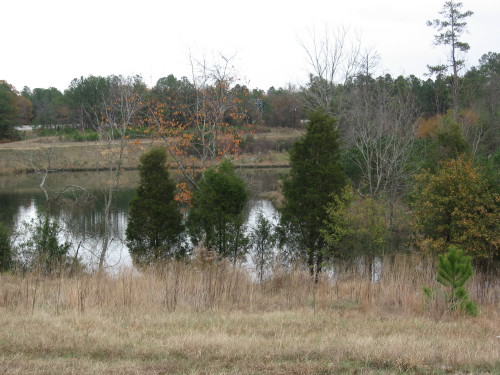
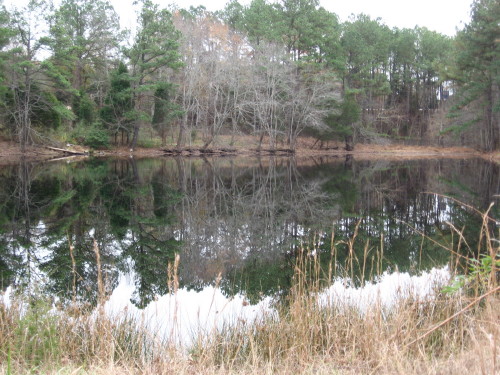
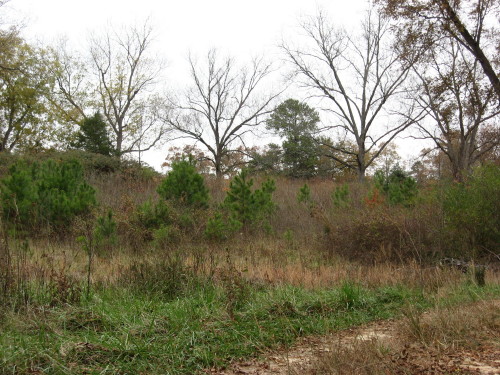
 As well described at New Raleigh, a new water garden has been approved for Fletcher Park. This controlled, even manicured, piece of urban wilderness was a Methodist orphanage most of my childhood. Now it is a heavily used recreational area with a friendly hillside picnic area and a gorgeous, richly planted plateau overlooking a really intriguing amphitheatre. The south edge used to be more or less thickly shrubbed and ignored, but now the environmental model project will dress up and bestow structured access to that area. For now, it’s a mess, but it sounds nifty.


 Fletcher water garden site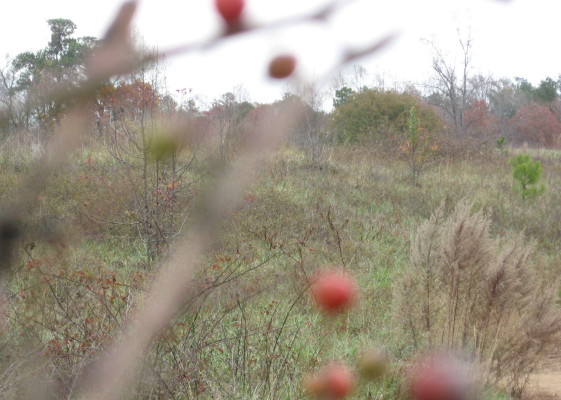



 raleighnaturalist
 The Raleigh Naturalist