The Milburnie Dam on the Neuse River, just upstream of Business 64, is historic, interesting, even fun – but also unhelpful environmentally and surprisingly dangerous. Having followed the long-planned and much discussed project as an environmental ed. teacher, explored the fascinating history of the structure and its predecessors, and recalled the family trips to the place, I am now ready to see it removed.
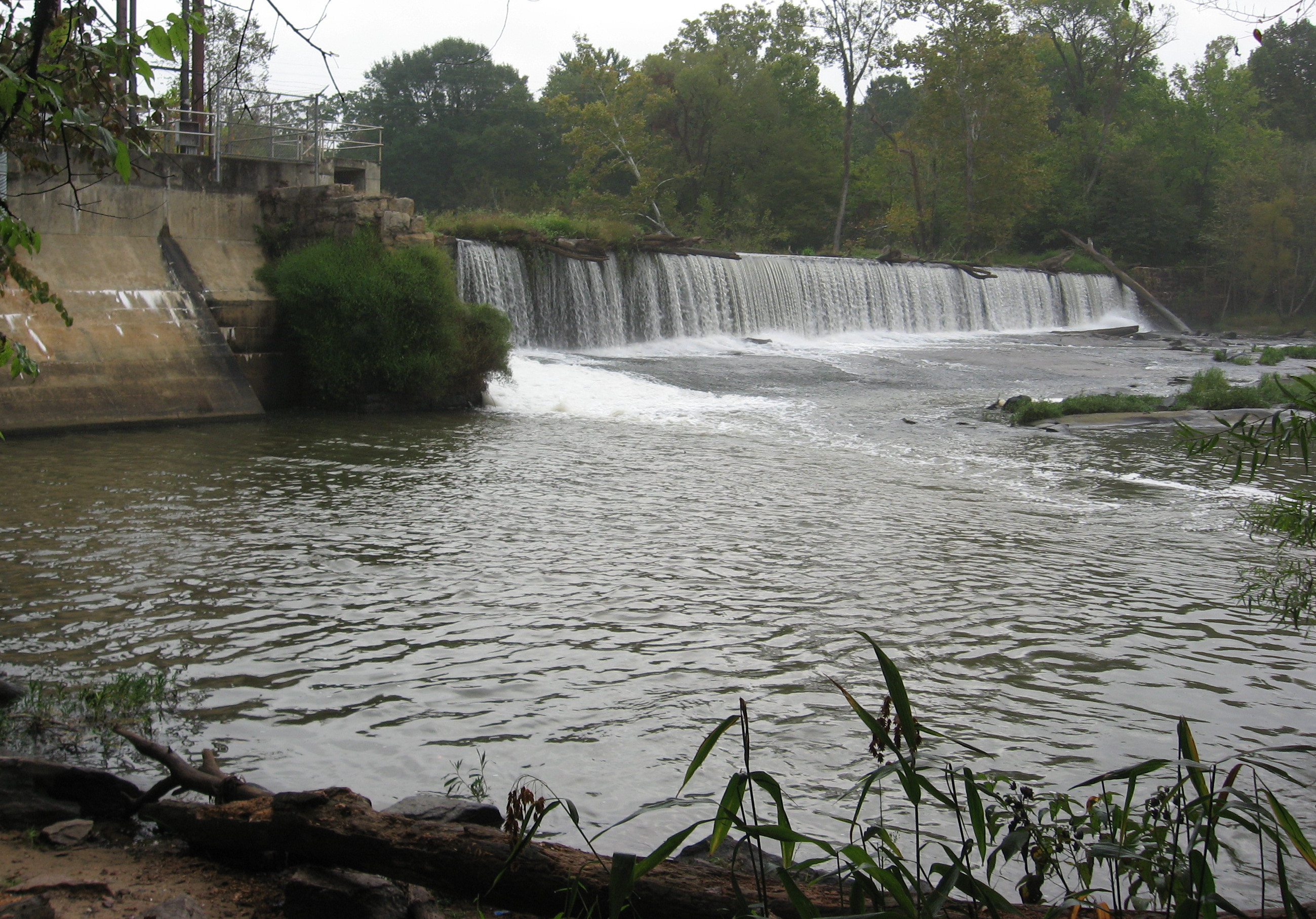 The dam was originally built of timbers in 1855 and served a papermaking mill. in 1900 the current rock structure was built and was used for a gristmill and later for electricity generation. Dam removal will serve several good environmental purposes: restore natural (shallow, high-oxygen) water flow above dam, promote shallow water species, including threatened and endangered ones, to utilize that stretch, and restore 15 miles of riverine habitat to migrating fish such as striped bass and American shad. These are excellent outcomes and in and of themselves probably outweigh the loss of black water boating and the probable draining of about 11 acres of wetland currently associated with the dammed water levels, which acres will be offset by Restoration Systems.
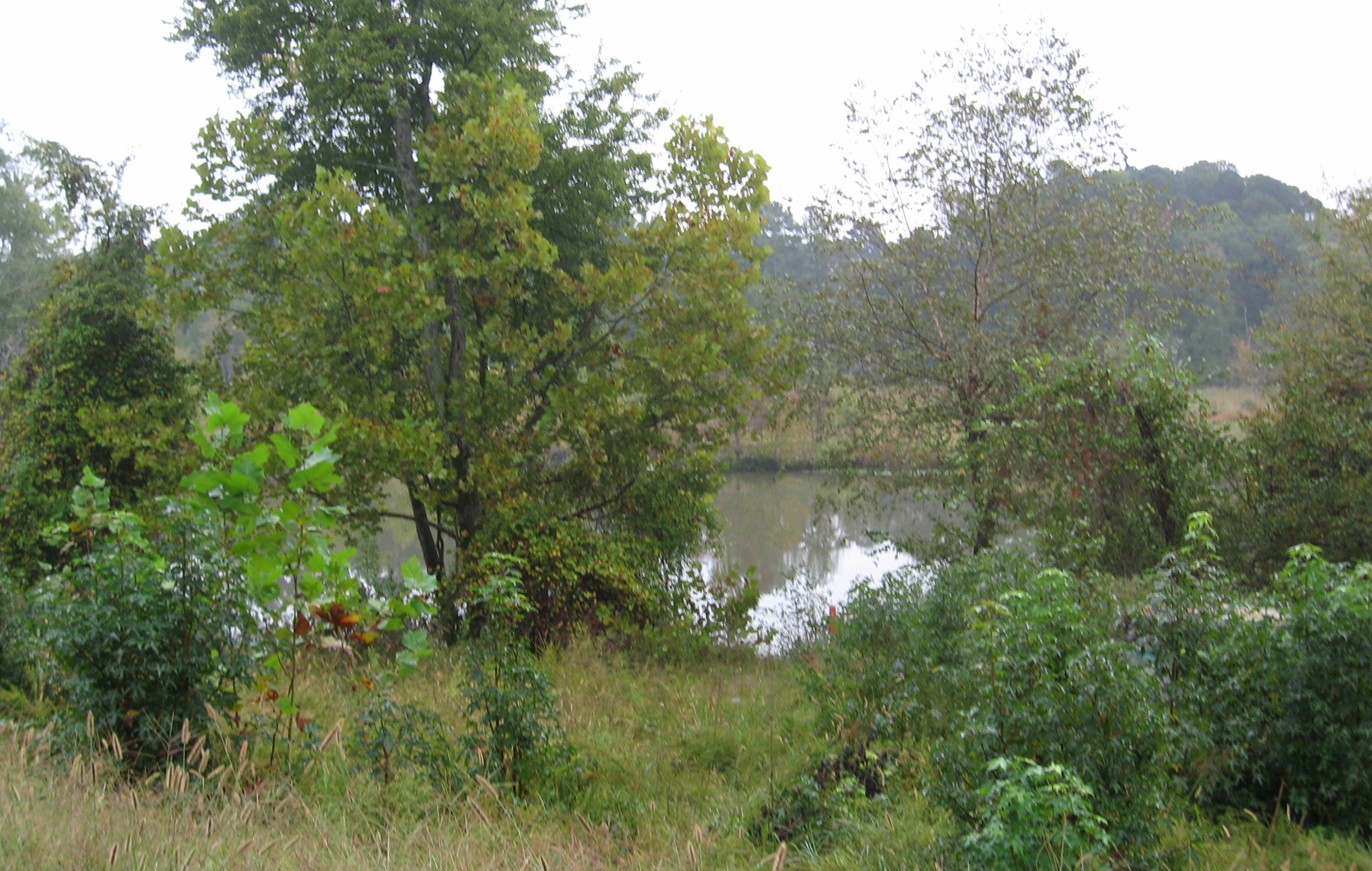
Neuse River above Milburnie Dam – a bucolic but unnatural linear lake
But the real clincher is the removal of an inviting, but dangerous and deadly “swimming” area below the dam. The leading picture (click to enlarge) shows this pool. It looks quiet, it is shallow at the shore – but if you approach the side of the pool nearest the main outflow of the dam, a powerful undercurrent puts you at real risk of drowning – at least 11 reported in media through the years and probably more. The YouTube video posted by Restoration Systems explains it all.
I look forward to canoeing this area without needing to portage the dam and I also look forward to watching the restoration efforts above the dam, both by the company and by Nature itself. The mitigation credits might seem to make the project purely commercial, but another way to look at it is using the laws to finance this expensive project. Careful work will be needed to avoid dumping pent-up sediment downstream, and above-dam residents will doubtless miss their linear lake but overall the project is well worthwhile. If you agree, you can sign their petition here.
Links
Neuse Riverkeeper analysis of pros/cons
2010 N&O article on dam removal proposal
N&O article about shad migration and the dam
2011 N&O article on revised proposal
2012 North Raleigh News pro-removal article
Charlotte Observer article on dam drownings
YouTube – dog retrieving right out to danger spot
artistic photo of dam with historical caption
Duke University article about removal benefits
Restoration Systems Milburnie Dam page
new video from RS explaining project
Nature Conservancy Report on dam removal(Pdf)
Removal Has Begun
NandO Article November 15, 2017
Key points from above article: It will take some time for recovery of the natural systems, they are lowering the water 6 inches at a time to ease transition for wildlife, most of the restoration credits will get used for SE 540.


 The Raleigh Naturalist
I am not so sure it would be a good idea? It has created a large wetland ecosystem and navigatable water behind the dam. The other reason is I am not a fan of Restorative Systems because they are doing it for money.
Comment by Arthur in the Garden! — October 4, 2012 @ 6:10 pm
Thanks John!
Comment by MP Kellagher — October 5, 2012 @ 4:20 am
Hello John. I love your idea of a blog –> book on The Natural History of Raleigh. It would be great if you would include not just the greenways but also the Neuse River which has very beautiful natural areas.
I am a long time paddler and founding member of the Carolina Kayak Club. I live near Milburnie Dam and have kayaked the area below the dam as well as above. I have even seen otters a quarter of a mile or so below the dam. There is also some mountain laurel along lower Crabtree Creek that one can find blooming in May. I would be delighted to take you along on some paddle trips down the river and show you the wonders to be found there.
Comment by Camille — October 26, 2012 @ 4:55 pm
I am trying to look at the bigger picture here. RS would be spending a lot of money to remove the dam. They don’t get paid to do this in money; they get “mitigation credits” which they later sell, for money, to someone else. MItigation credits can only be sold to people/companies/developers within a limited geographical area. The people who buy mitigation credits are people who need them because their project is going to do a lot of environmental damage. They buy the credits to “mitigate” this damage. (This system of credits is well established. Google it for a better explanation.)
Removal of the Milburnie Dam will generate a lot of credits because it is a big project. So, who is going to buy these credits? One possibility is that the City of Raleigh could buy them to build the Little River Reservoir, which is definitely in the works. It has a few obstacles to overcome, but right now it looks like the plan is to build it. That reservoir is a huge project and will require a lot of mitigation credits, from this general area.
Would you be for the removal of the Milburnie Dam if you knew that removing it will help lead to the green light for the Little River Reservoir? Did you realize that the credits generated from the removal of the dam will definitely be used to allow environmental damage somewhere else, even if not the LRR, but, by definition, the damage will be somewhere close by? RS touts the environmental benefits of the dam removal, but this is not why they are doing it – they are earning credits that they will need to sell to get their money back – do you really think they have no clue who is going to buy these credits? So, a good question to have answered at this point is: who is going to buy those credits?
Before I decide if I am for or against the removal of the dam, I’d like to know how the removal is going to affect other environmentally damaging projects in our area. Wouldn’t you?
Comment by Marcia Deans — November 25, 2012 @ 1:05 pm
Excellent points by Marcia, and worthy of very strong consideration. Is the Little River reservoir inevitable?
Comment by raleighnaturalist — November 25, 2012 @ 2:44 pm
I would not say “inevitable” but it looks like the plan is to build it. It looks like there are several hurdles to overcome between now and the finished project, and who knows if they can overcome all of them. A good reference is a report issued on this topic by the City of Raleigh in Sept. 2012, http://littleriverreservoir.com/Graphics/2012%20Water%20Resource%20Assessment%20and%20Plan_FINAL_9_27_12.pdf.
Also, littleriverreservoir.com has a lot of info. I could not find the answer to my question above in either location though, and I am still searching to see how the mitigation credits from the Milburnie Dam removal project relate to the LRR project, if at all…
Comment by Marcia Deans — November 25, 2012 @ 4:02 pm
what company is funding the removal of this dam?
Comment by Nino Holt — March 25, 2013 @ 12:39 pm
Nino, the project is funded directly by Restoration Systems, which gets its money by selling the “eco-credits’ they earn by doing the work. So in the end, the money comes from other companies who are paying a fee to do damage elsewhere, with this work being the balance or restoration required by law.
http://www.restorationsystems.com/
Comment by raleighnaturalist — March 25, 2013 @ 12:52 pm
[…] to the Old North State. Locally, Restoration Systems is spearheading an effort to remove the Milburnie Dam across the Neuse […]
Pingback by Tenant Highlight — Restoration Systems | HEDGEHOG HOLDINGS — May 31, 2013 @ 9:47 pm
[…] Check out Raleigh Nature’s blog post for more information on the Milburnie Dam. […]
Pingback by Neuse River Greenway: MP 15-17 & Milburnie Dam — February 17, 2014 @ 12:12 pm
The Milburnie Dam is the most spectacular historic and scenic spot in Wake County. Its value is its awesome beauty. Removing this dam is akin to removing Niagara Falls because some people foolishly try to go over it in a barrel and drown, or some fish can’t go upriver of the falls to spawn. I hope you do not succeed in destroying Milburnie Dam because of trendy “mitigation credits” which allow developers to destroy other scenic spots..
Comment by Dr. Anne Russell — December 17, 2015 @ 1:18 am
after talking to the people involved in taking down the dam and reading what is out there now about what they are doing not enough was done to explain what they were going to do the river and surrounding land. They are destroying the wetlands and have displaced many animals and fish. The mollusk that they were trying to protect that only live in our river were left high and dry and eaten by the heron. No one told them they were worth all the destruction along the river. The one inlet that was a nursery to many species for as long as the river has existed are now displaced. every spring I would see a new crop of babies. It was a daycare center. a protected place for them to grow until it was time to leave. All the little inlets and ponds that the beavers help create thank god are home to a variety of animals. It is what attracts people to the river. People are looking for wildlife. we had a very old turtle with the cutest face living in the inlet behind Hedingham. he was estimated to be close to 100 years old and had lived almost entire life in that inlet. I named him little foot after the character in the movie land before time. people would come to see him. he was estimated to weigh several hundred pounds. he is gone. he had to leave. he needs at least 3 feet of water to submerge completely. he is huge. he left with his family. The people on the river loved the river the way it was. i have heard complaints from people several towns down river. sickened about what is being done. Again i think if it was reported on better what they planned to do there would have been more people to stop it. The inlet was my favorite place and the animals that i saw everyday. my turtle buddies that came to me everyday are gone. They have taken away what was special about the river.
Comment by Susan Brown — October 18, 2017 @ 8:33 am
Wow, thank you Susan, for your thoughts and observations. I can only hope that over time, the new ecosystems that emerge will also give you pleasure. The transition, clearly, is going to be painful.
Comment by raleighnaturalist — October 28, 2017 @ 7:25 pm
The company removing the dam gets credits for repairing the environment which they sell for a profit to developers to destroy habitat in other areas…..not good…
Comment by Arthur in the Garden! — November 14, 2017 @ 1:17 pm
this Wednesday is the removal date. Next weekend will be a good time to investigate the river bed as it has been covered for 100 years as all the water will drain and only a shallow river bed will remain!!!
Comment by Arthur in the Garden! — November 14, 2017 @ 1:14 pm
There will be a loss of black water boating and the probable draining of about 11 acres of wetland currently associated with the dammed water levels. Today is the beginning of the removal of the dam. Check out their webcam.
Comment by Arthur in the Garden! — November 15, 2017 @ 2:36 pm