Raleigh from Dix Hill
Dorothea Lynde Dix (1802-87) was perhaps the most famous and admired woman in America for much of the nineteenth century. Beginning in the early 1840s, she launched a personal crusade to persuade the various states to provide humane care and effective treatment for the mentally ill by funding specialized hospitals for that purpose.
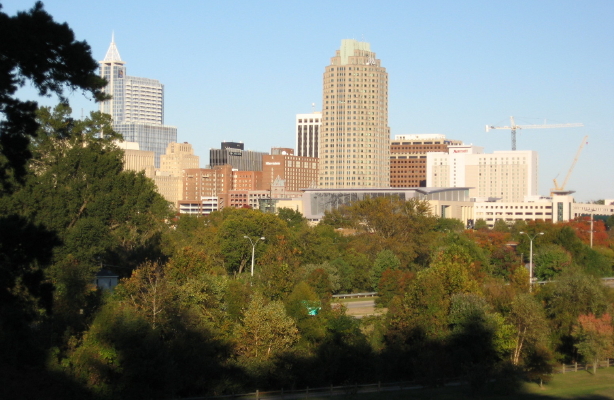
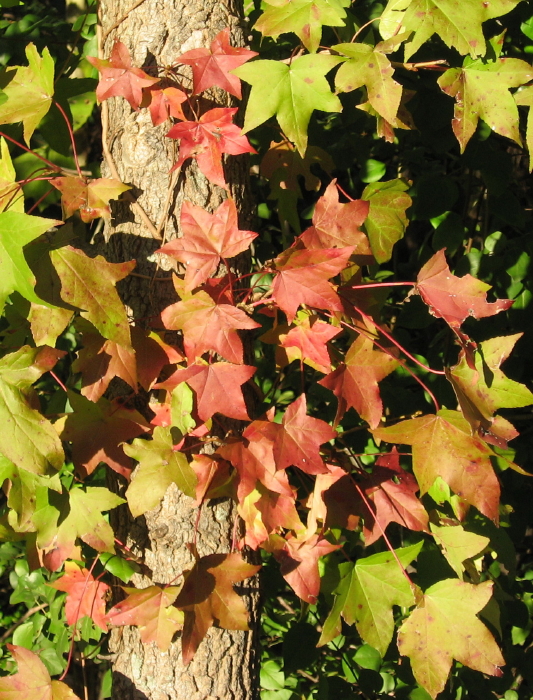
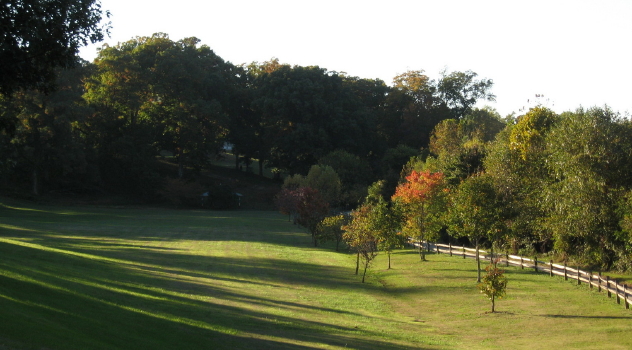
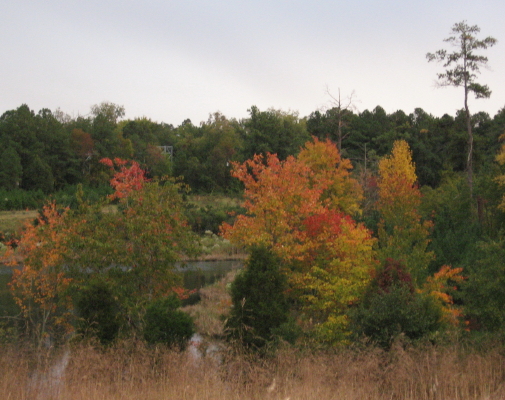
306 acres are left from a huge estate that was given over to the benefit of some of our neediest folks. As the fall colors take their time this year decorating Raleigh’s skyline, so Dix Hill’s fate lingers in the slow balance of state decision. Walk the big meadow with me and glimpse some early fall colors.
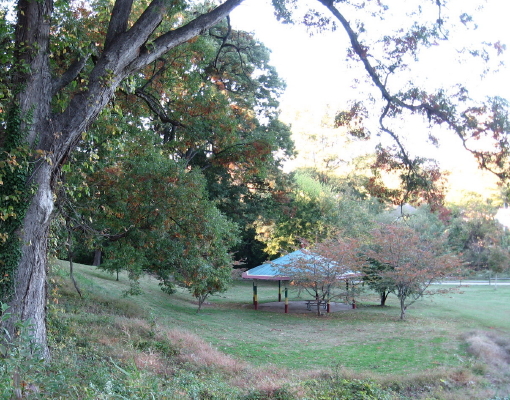
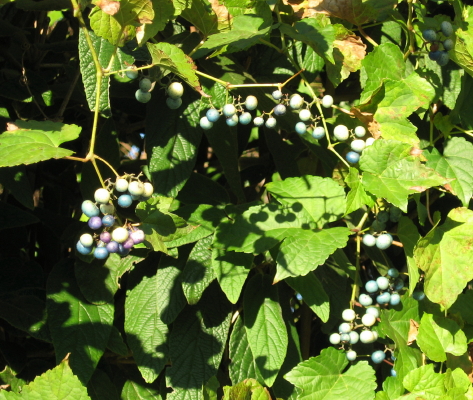
We turn from downtown and look down at the gazebo and greenway path which runs along Rocky Branch as it follows its new, straightened course beside Western Boulevard. On that walk we’ll see lots of elusive birds, wild grape, and some small spots of fall color.
The campus has many historic buildings, massive white and red oaks that ring the meadow, a small grove of highly productive pecan trees, and one open slope that is the joys of all sledders. Centennial Campus and the Farmer’s Market have already taken the lion’s share of what once was . Now the state needs to let Raleigh’s long term interests take precedence over a short-time cash windfall. The folks at Dix 306 are working hard to make that happen. We should support them any way we can.
Below is a trace of fall glory in midst of a glorious lingering summer. Hopefully this image does not represent the sunset of hopes for the landscapes of Dix Hill.
****************
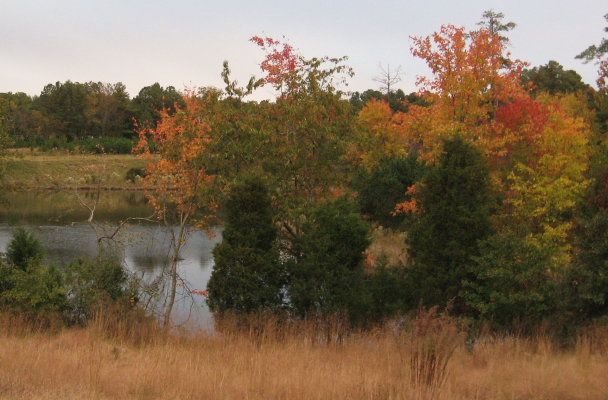
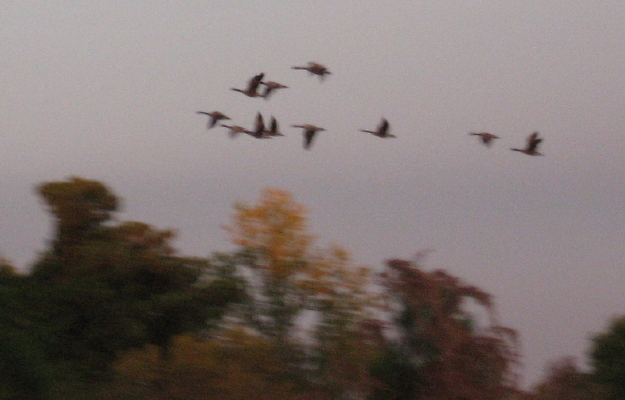
I went on this walk partly because of Ashley Sue over at Green Grounded, who complimented me in anticipation of seeing fall colors on Raleigh Nature. Below are clickable thumbnails of some other sightings at Jones lake off Sunnybrook, and then ending with my all time best fall picture, from the west Beltline. Happy leafing!
November 1, 2008
Slow Fall at Dix

October 20, 2008
Blue Ridge Parkway and other waypaths
 The Blue Ridge Parkway serves as a ribbon of access to the peaceful grace of both rural and wild scenes in the NC mountains. The stretch surrounding Doughton Park, where Cara and I camped in August, offers more of the agricultural type. The Parkway passes through currently used farms, with cows, sheep, goats and small gardens. Near Doughton Park is Brinegar Cabin, whose old style of mountain farm living was enacted, and thus preserved, well into the 20th century. I posted a set of documentary photos about it at Pecans & Mistletoe, which is fast becoming the home of my explorations into heritage sustainable agriculture as well as a site for extended nature projects of all kinds. The nature images from our trip are on a post at the Raleigh Nature Photo Archive, which, like Pecans & Mistletoe, is a blogspot blog where I load and display most of the pictures for The Natural History of Raleigh, which is the name of my overall nature project and the future book which will culminate the work of these three blogs: Raleigh Nature, the main site, Raleigh Nature Photos, the photo album site, and Pecans & Mistletoe, the nature project site. Occasionally some piece of all this leaks over into Raleigh Rambles, my personal blog, where I can talk about anything I want.
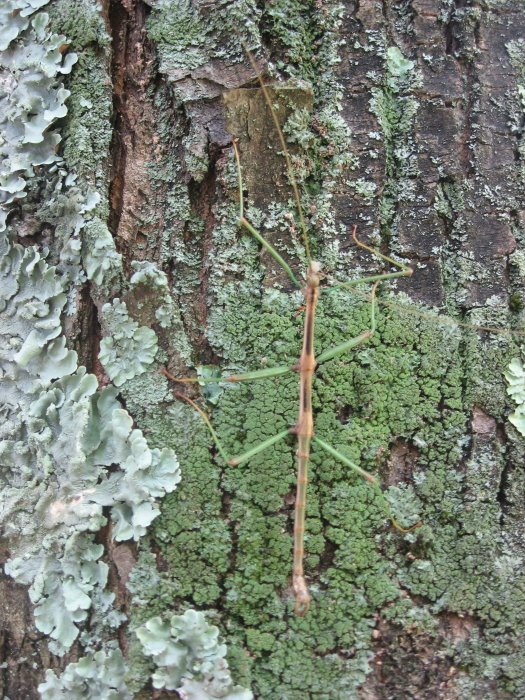
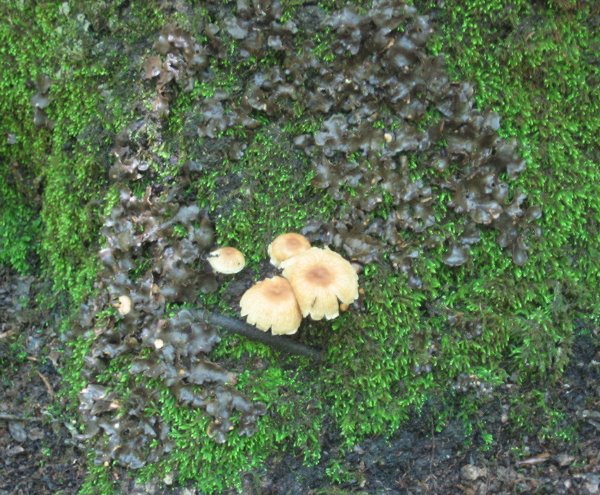
Getting back to our mountain trip, we saw a beautiful pair of walking sticks at our campsite on the grassy knob of Doughton Park. There are campsites at this park where you can walk out your tent, start down the hillside behind you, and go for a day or so before hitting a road. We took a long hike through a nearby wooded trail and saw lots and lots of mushrooms, as you will see on the photo album. Below is a particularly lovely grouping of shrooms, moss, and liverworts.
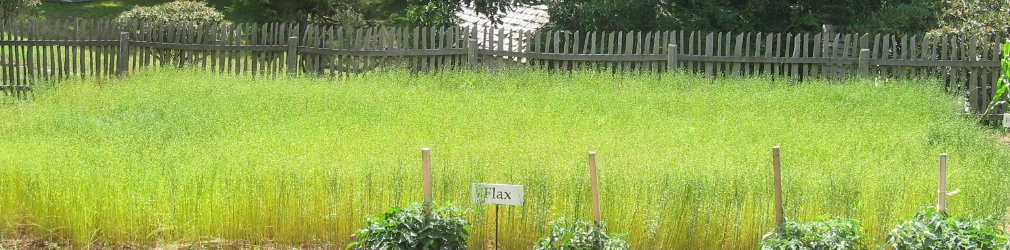
Brinegar Cabin, which is right on the Parkway, really reminds you of how closely we lived with nature until not so many decades ago. The Spring House (which is now contaminated by a Park Service outhouse built uphill from it), the naturally cooled food cellar, and the “linsey-wooly” products and cobbling service which generated cash money, all are vivid reminders of a way of life that, at this site, lasted until the 1930’s. Best of all was the sights and lessons of growing and processing flax, which excites papermakers like ourselves very much.
September 14, 2008
Visual Thoughts

Heavy Skies by D L Ennis at Visual Thoughts
Looks like a painting, right? But it is a photograph – not mine, of course, but an example of the amazing stuff over at Visual Thoughts, a fellow blog which doesn’t easily mesh with the other resources on my side bar but still belongs and is cherished on my blogroll. D L Ennis posts about life and art and very much whatever, but if you’re in the mood or have a need to drink in a direct connection with nature, go to this unique blog: nature is there, coming through loud and clear. Through some very artistic human eyes.

Here is another image from Visual Thoughts. The flower had ole D L stumped. Later, when I showed it to Cara she knew exactly what it was and went to look it up. Meantime, I saw a comment by Jan had identified it as lycoris radiata, or red spider lily. Cara knew it as outdoor amaryllis, for the single stem’s dramatic (and leafless) emergence. We didn’t get to have the fun of informing D L , but I found Jan’s blog, which is lovely. Just one of the wonderful things you may find at D L Ennis’s Visual Thoughts. Check it out!
July 31, 2008
White Squirrels and the Brevard fault: PFI rules!!
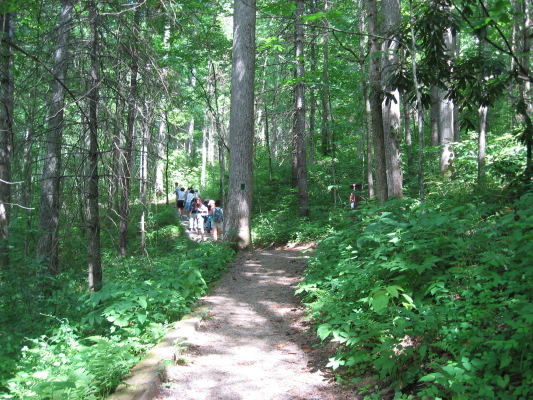
Teachers in the woods! Climbing rocks and jumpin’ in waterfalls! That’s what I call a workshop! For 5 very full days, two dozen educators traveled the Land of Waterfalls, centered around the Brevard fault, seeing some amazing geology, flora, and fauna with the staff of, and presenters for, the Pisgah Forest Institute. We got treated like teacher queens for a day (okay, one other guy besides me as kings in this group of elementary school teachers). We got free stuff, wonderful information and some great hikes.
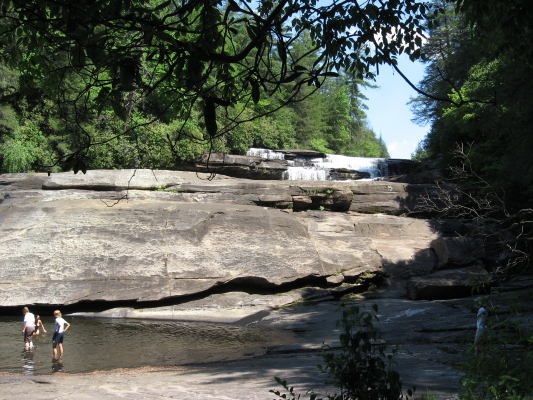
teachers in the Little River!
The Pisgah Forest Institute is an initiative of Brevard College – a beautiful campus that is ancient as a 2 year college but only 14 years old as a 4 year. PFI focuses on “the earth and environmental science needs educators encounter in their classrooms. ” The workshops are funded partly through grants from the USDA Forest Service. This part of the mountains receives more annual rainfall than anywhere in the continental U.S. except for the Northwest temperate rain forests (or would if there weren’t a severe drought). There is a unique feel to the wilderness areas and even more so to the farmland, it seemed to me this trip. Rich, well cultivated fields and not so much the hard scrabble feel you see (disappearing) in the northern section of our mountains.
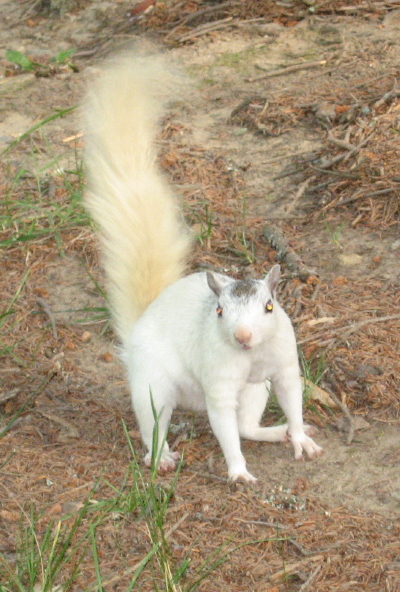
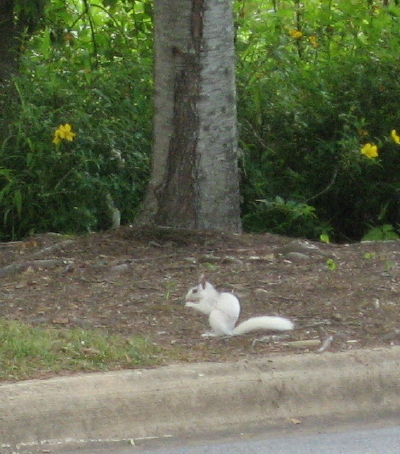
The town of Brevard hosts a Music Center, has a nice college/tourist shop and bar scene, and is famous for – did I mention them?, – the white squirrels. These little guys just blew me away, and set me off on an extended online chase to research white squirrels. There was a lot to find. The local history traces their origin to an overturned carnival truck in 1949. There is a research institute devoted to them, a White Squirrel Festival each year in Brevard, and of course a White Squirrel Lover’s blog. The very best picture I found online is on a realty site, and clearly the white squirrel is a promotion bonanza for the town of Brevard, though their claim to fame is not without controversy (other “homes of the white squirrel”).
on the move
The PFI would educate and inform us and then take us on a related field trip. We made 3 major expeditions: Holmes Educational State Forest, Caeser’s Head State Park, and a new amenity, Dupont State Park, which contains several spectacular waterfalls. We also conducted a stream activity at the trout hatchery on the Davidson River. Each place offered valuable lessons and experiences. At Holmes, which is open to the public, we practiced tree i.d. and took the “talking tree” walk. Caeser’s Head offered spectacular views of the Piedmont vista as seen from the edge of the Blue Ridge system. So many wonderful pictures – I offer an album at the end of the post, and many of the following text images are linked to a picture.

The park gots its name from a head-shaped rock that protrudes from the highest viewpoint. Across the chasm, you see Tablerock Mountain, a monolith of intruded younger rock whose side is painted by the staining action of rainwater.

Dupont, after a decent hike, offered beautiful waterfall views, including some used in The Last of the Mohicans. Here the Brevard Fault is in full view, fracturing and pushing til some of the huge blocks become square tree planters. The Little River winds its way down the rock cascades, though it was quite low the day my pictures were taken.

The young lady below is leaping from Hooker Falls, another fault-block structure in the park. We learned some background geology at Caeser’s Head and then put it into action at Dupont, locating the folded layers in a piece of gneiss that represent eons of slow bending pressure.

 Kevin, program director for PFI, holds a northern water snake from the Davidson River. We measured stream quality parameters and took a tour of the trout hatchery, which attracts vultures from miles around. Back at the Brevard campus, we saw a stream rehabilitation process and surveyed native as well as invasive plant species on campus. Below is a picture of hemlock infested with wooly adelgid (the small white spots). Just one of the many ecological challenges faced in the Southern Appalachian mountains. Thanks, PFI, for such a great trip and for helping me learn so much!

July 22, 2008
The Domain of Mushrooms – raleighnature.com
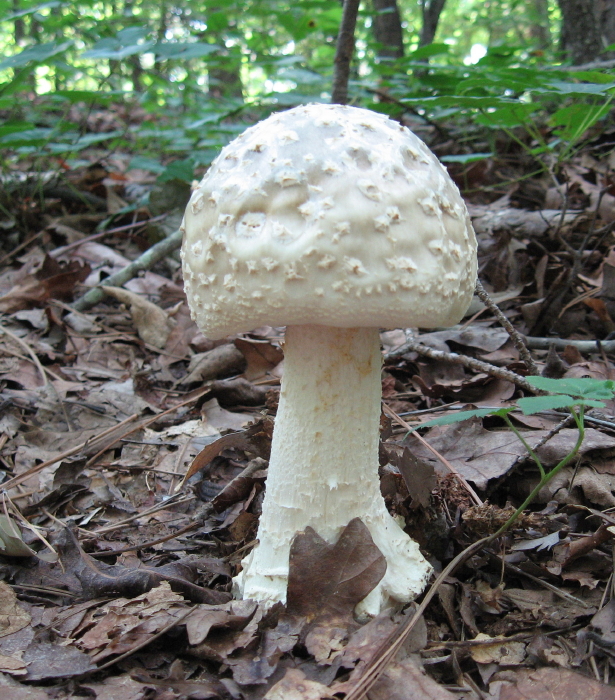
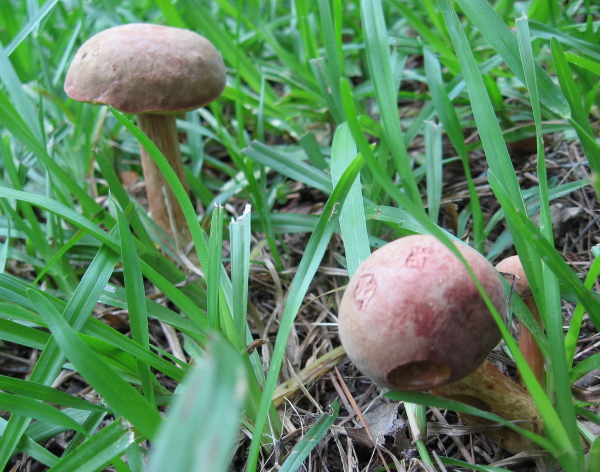
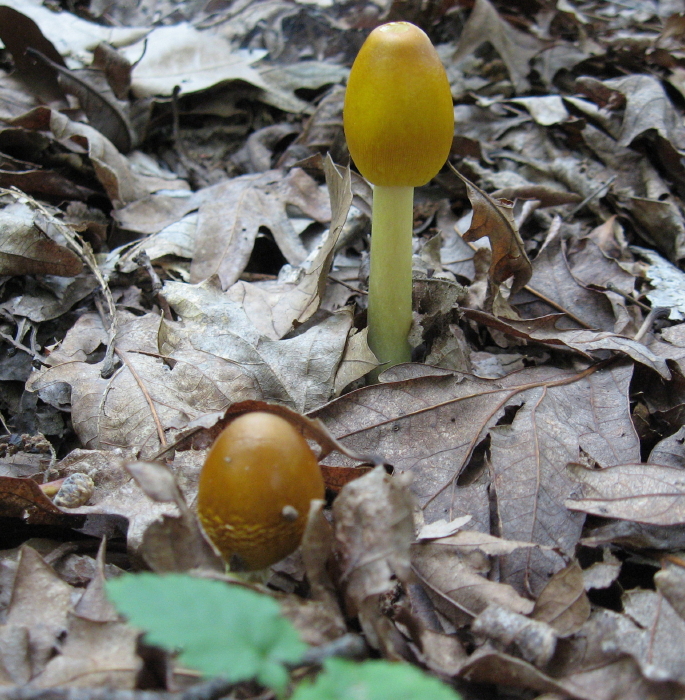
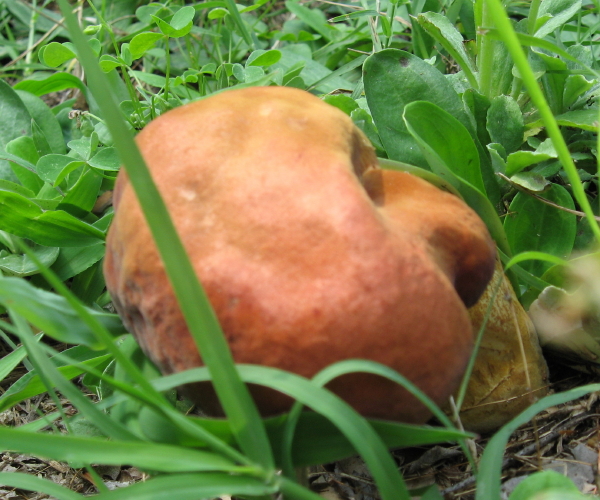
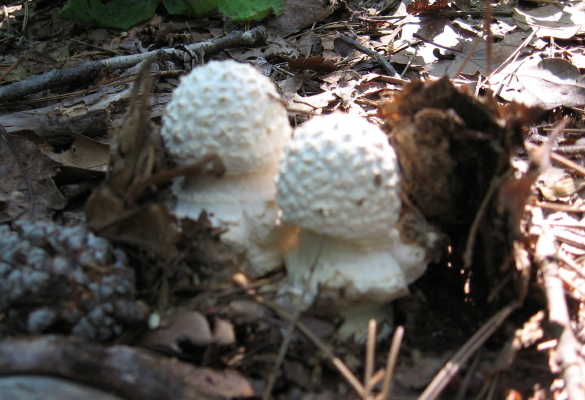
We have had plentiful rain, in the short run, at least, and when I saw a couple of mushrooms in a row I decided to go on a mushroom walk. Not much to say: I am blogging from the library on a timeclock and I don’t know anything about mushroom i.d. Here they are and we’ll sort them out later. But what a variety! And what change in any one over time….now I’ve had time to look at my National Audubon Society Field Guide to North American Mushrooms – and I’m not about to tell you a positive i.d. on any mushroom! Don’t eat any of them!! Unless you are an expert or with an expert. I will try some if T.P. or Katie and Russ have some to share, but I sure don’t trust my judgment. Fun to watch, though. And remind yourself the mushrooms we see are just the fruiting body (spore producer) of the fungus organism – a whole network of tiny filaments in the ground or, more likely, in the dead plant material, especially wood.
Mushrooms are in the kingdom of Fungi in the domain of Eukarya.
NEWS: This blog is now published at the domain www.raleighnature.com and has moved from it’s old site. If you have the old netweed/raleighnature url as a favorite or on your blogroll, I would greatly appreciate you updating it.
***********************************

***************************
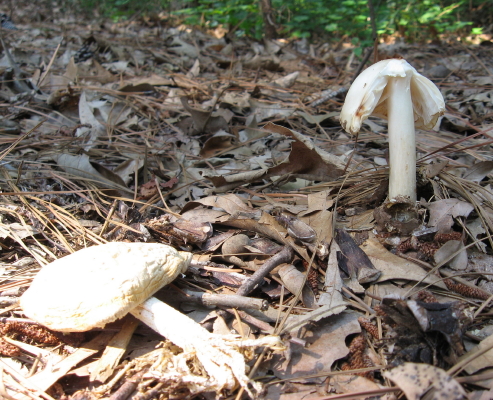
*******************************
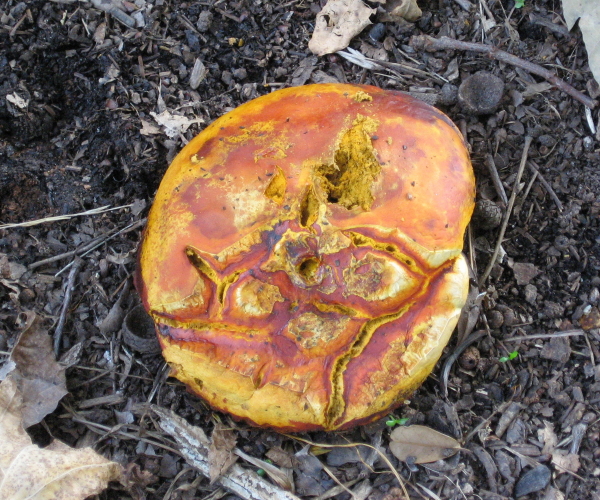
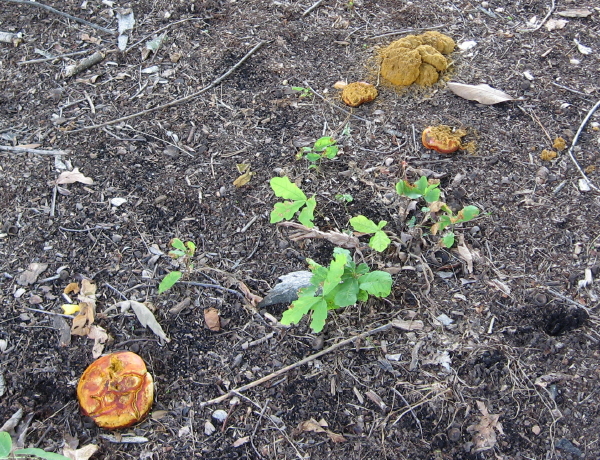
*************************
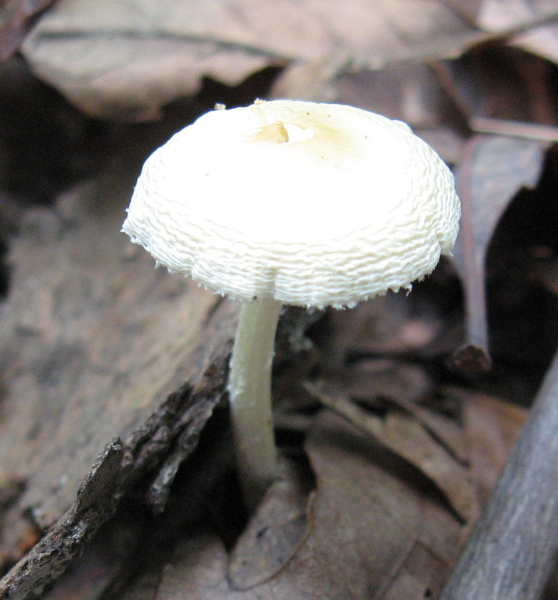
These pictures were taken at Cedar Hills Park and Fred Fletcher Park.
July 4, 2008
Back to Basics – East Raleigh beginnings

lower Longview Lake from south
This is the first picture I took with my new camera for this blog, in late January 2007. Longview Lake was the big body of water in my childhood. I was more familiar with the upper section, just below Enloe, which has been surrounded by development and is filling up with silt. This lower section is in good shape, and some of the homes have small docks, of which I’m quite envious.
Longview temporarily collects the waters of Bertie Creek, coming down Bertie Drive below Enloe, which then crosses Milburnie at Peartree Lane and makes its way down to Crabtree as seen below. This lowest stretch of Bertie, which parallels Milburnie and crosses under Buckeye Trail’s beginning, gets some interesting visitors exploring upstream from the larger creek. Just below the Buckeye bridge over it, the small creek pools up, and I have seen large sliders and snappers meditating a climb over the partly submerged sewer pipe blocking their way. Above the greenway bridge, there are some nice rock riffles, and I was once amazed ( and too startled to act) by lifting up a large flat rock to reveal an Amphiuma – my only sight ever of this huge, biting salamander.
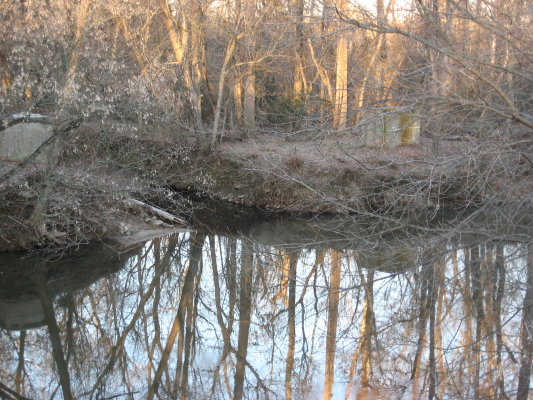
Bertie Creek hits Crabtree
Crabtree and Bertie enclose a diagonal of East Raleigh neighborhood, east Rollingwood, that is bordered by rich upland woods. These high areas surround a large rock outcrop that turns the creek right after it has absorbed the waters of Marsh Creek. That union, Marsh Creek and Crabtree, creates a huge marshy area highlighted by Raleigh Swamp at Capital Boulevard. Below that, after the rocky overhang, Crabtree is steadily on its way to becoming a coastal plain waterway. It’s flat, meandering path is lined with deep, silt-lined walls of clay, gouged regularly by floods. It is not a pretty creek – the banks give the impression of accumulated eons of ring around the bathtub. But there are interesting tangles of trees and the occasional surprise.
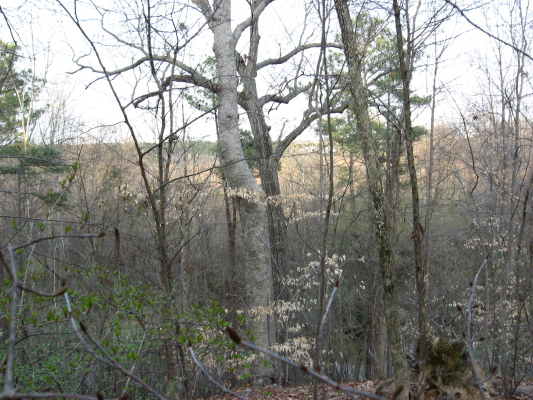
Marsh Creek floodplain from Rollingwood
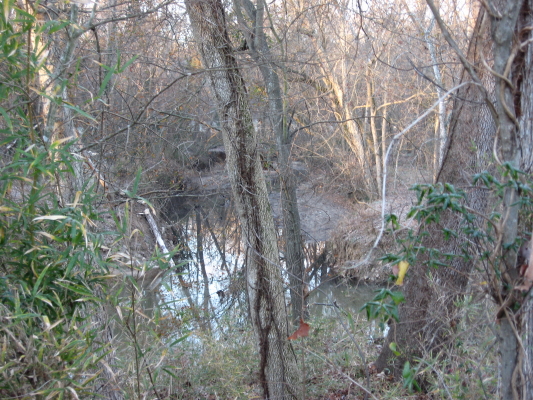
Crabtree at Milburnie
Nature News
Here, like usual, are so many opportunities to learn about and interact with nature. Even if you don’t need the structured activities, it’s nice to be reminded of the beavers at Blue Jay Point, the farm history at Oak View Park, the bats at Crowder Park on Ten-ten, and the restored gristmill at Yates Mill.


 raleighnaturalist
 The Raleigh Naturalist


